


Introduction
If you have searched for a co2 laser cutting machine, you have probably seen claims about its versatility with wood, acrylic, and even metal. But how does a co2 laser cutter work? And what can it really cut — and what should it not?
This article answers how does a co2 laser cutter work directly. We explain the core physics behind it, break down the materials it handles best, and give you a clear picture of its capabilities and limits — so you can decide if an industrial co2 laser cutter is right for your shop floor.
How Does a CO2 Laser Cutter Work?
To answer how does a co2 laser cutter work, you need to understand three things: how the beam is created, how it is guided to the material, and how the cut actually happens. A co2 laser cutting machine uses a fundamentally different principle than fiber or diode lasers, which is why its material capabilities are so distinct.
The Gas Laser Tube and Excitation Process
Inside every co2 laser cutting machine, a sealed glass tube contains a precise gas mixture — carbon dioxide, nitrogen, helium, and small amounts of hydrogen or xenon. When a high-voltage electrical discharge passes through this gas, it excites the nitrogen molecules. Those nitrogen molecules transfer their energy to the CO2 molecules, which then release that energy as photons — laser light — at a wavelength of 10.6 micrometers, in the far-infrared spectrum.
According to the Wikipedia article on carbon-dioxide lasers, CO2 lasers are among the most efficient gas lasers, with a wall-plug efficiency that can reach up to 20% — converting one-fifth of the input electrical power into usable laser output. The mirrors at both ends of the tube form an optical resonator: the fully reflective mirror at one end and the partially reflective output coupler at the other cause the light to bounce and amplify until a powerful, coherent beam is emitted. This is the core answer to how does a co2 laser cutter work at the physics level.
Beam Delivery via Mirrors and Focusing Lens
The raw beam from the tube is invisible to the naked eye. It travels through a series of precision-aligned mirrors — typically three — that direct it along the X and Y axes toward the cutting head. Inside the head, a focusing lens concentrates the beam down to a spot size as small as 0.1–0.3 mm. This extreme concentration of energy produces the intense heat needed to vaporise or melt the material along the programmed path. In an industrial co2 laser cutter, this optical train is enclosed and protected from contamination.
Assist Gas and the Cutting Mechanism
Cutting with a co2 laser cutting machine is not just about melting. A stream of assist gas — compressed air, oxygen, or nitrogen — is blown through a nozzle concentric with the focused beam. This gas serves two purposes: it blows the molten material out of the kerf (the cut channel), and it helps control the heat-affected zone. When oxygen is used, it also adds an exothermic reaction that accelerates the cut in materials like mild steel.
Key Components of a CO2 Laser Cutting Machine
A complete co2 laser cutting machine is more than just the laser tube and optics. Several subsystems work together for reliable production output.
Laser Power Supply and Chiller
The power supply converts mains electricity into the high-voltage DC or RF energy needed to excite the gas tube. CO2 tubes generate significant heat and must be cooled continuously — typically by a water chiller that circulates distilled water through a jacket around the tube. Without proper cooling, the tube overheats, the gas mixture degrades faster, and output power drops.
Motion Control System
Most modern CO2 laser cutters use a gantry-style motion system with stepper or servo motors driving belts or ball screws. The controller interprets the toolpath generated by CAD/CAM or laser software (like LightBurn or RDWorks) and moves the cutting head in precise X–Y coordinates. Positioning accuracy is typically ±0.01 mm on industrial-grade machines.
Exhaust and Air Assist
Cutting organic materials like wood and acrylic produces smoke and fumes. An exhaust fan and duct system removes these from the cutting area. Meanwhile, the air assist pump (separate from the assist gas line) keeps the focusing lens clean from smoke residue, prolonging its life.
Materials That a CO2 Laser Cutter Handles Best
The 10.6-micron wavelength is strongly absorbed by organic and polymer materials. This makes CO2 lasers the go-to choice for non-metal cutting, and understanding this helps answer how does a co2 laser cutter work differently on each material type. Here is how it performs on the three most common material families.
Wood — The CO2 Laser Wood Cutting Machine in Action
Wood is one of the most popular materials for CO2 laser cutting. A co2 laser wood cutting machine can cut plywood, MDF, solid hardwood, and cork with clean edges and minimal charring when parameters are dialled in correctly. A typical 80–100 W co2 laser wood cutting machine cuts through 6–10 mm plywood at a speed of 300–500 mm/min. Thicker cuts — up to 20 mm — are possible with higher wattage (130–150 W) but require slower speeds and multiple passes. The key advantage is that CO2 leaves a slightly darkened, sealed edge that many woodworkers find aesthetically appealing, making an industrial co2 laser cutter a favourite in furniture and cabinetry shops.
Acrylic — CO2 Laser Cutting Machine Acrylic Performance
Acrylic (PMMA) is arguably the best material for CO2 laser cutting. The 10.6-micron wavelength is absorbed so efficiently that the beam melts the acrylic cleanly, and the assist gas blows the molten material away. As the cut edge cools, it re-solidifies into a flame-polished, transparent finish — no sanding or secondary finishing needed.
A co2 laser cutting machine acrylic setup with an 80–100 W tube cuts 5–8 mm acrylic at good speed; a 150 W machine can handle up to 20–25 mm in a single pass. A dedicated co2 laser acrylic cutting machine is essentially the same unit with optimised parameters — lower speed and higher air pressure for thick sheets to prevent flame from discolouring the cut face. Many signage companies run co2 laser cutting machine acrylic operations around the clock because the finish quality eliminates secondary processing.
Metals — What a CO2 Laser Cut Metal Machine Can and Cannot Do
This is where the most confusion exists. Can a co2 laser cut metal machine handle steel? The short answer is yes, but with important limits.
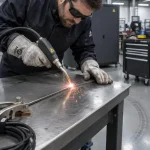
A standard co2 laser cut metal machine (80–150 W) cannot cut through thick steel or aluminium — the 10.6-micron wavelength is largely reflected by metallic surfaces, and the power density is insufficient for conductive metals. However, thin-gauge metals (0.5–1.5 mm stainless steel or carbon steel) can be cut with a high-power co2 metal laser cutting machine (200–300 W+) and oxygen assist gas, which adds exothermic energy.
For engraving on metal, a co2 metal laser cutting machine can mark coated or anodised surfaces, and with specialised marking sprays (like Cermark), it can create permanent marks on bare metal. But if you need to regularly cut 2 mm+ steel or aluminium, a co2 metal laser cutting machine is not the right primary tool — a fiber laser is. Understanding this distinction upfront saves buyers from costly mismatches.
Other Compatible Materials
Beyond wood, acrylic, and thin metals, CO2 lasers also excel on:
- Paper and cardboard — clean cuts, ideal for packaging prototypes
- Leather and fabric — no fraying, sealed edges on synthetic fabrics
- Rubber and silicone — gaskets, stamps, and seals
- Plastics (ABS, polycarbonate, PETG) — note that PVC and vinyl must be avoided because they release toxic chlorine gas when laser-cut
- Glass — engraving, not cutting (thermal shock cracks thick glass)
- Ceramics and stone — marking and shallow engraving
Power Tiers and Thickness Capabilities
The following table shows typical cutting thicknesses for a co2 laser cutting machine at different power levels, based on industry-standard data. Actual results vary by machine quality, material density, and cutting speed.
| Material | 40–60 W | 80–100 W | 130–150 W | 200 W+ |
|---|---|---|---|---|
| Plywood / MDF | 3–5 mm | 6–10 mm | 10–15 mm | 15–20 mm |
| Acrylic (PMMA) | 3–5 mm | 6–10 mm | 12–20 mm | 20–25 mm |
| Leather / Fabric | 3–5 mm | 5–7 mm | 7–10 mm | 10–12 mm |
| Mild Steel (with O₂) | — | — | 0.5–1 mm | 1–2 mm |
| Stainless Steel (with O₂) | — | — | 0.3–0.8 mm | 0.5–1.5 mm |
| Cardboard / Paper | 3–8 mm | 8–12 mm | 12–15 mm | 15+ mm |
Sources: Industry practice consolidated from machine manufacturer specifications and cutting test data. Actual results depend on machine condition, lens quality, and material grade.
Limitations of CO2 Laser Cutters
Every technology has trade-offs. Being aware of CO2 laser limits is just as important as knowing its strengths, and it completes the answer to how does a co2 laser cutter work by showing where it struggles.
Metal Thickness and Reflectivity
Even a powerful industrial co2 laser cutter will struggle with reflective metals — copper, brass, aluminium, and thick stainless steel. The beam reflects off the surface rather than being absorbed, which wastes energy and can even damage the laser tube or optics. For these materials, you need either a very high-power CO2 system (500 W+) or, more practically, a fiber laser, whose 1-micron wavelength is absorbed far better by metals. This is why a co2 laser cut metal machine is typically limited to thin-gauge applications only.
Engraving vs. Cutting Trade-offs
Many buyers expect one co2 laser cutting machine to both cut thick wood and engrave fine detail. A CO2 laser can do both, but optimising for one compromises the other. Cutting thick material requires a longer-focal-length lens (2.0–4.0 inches) for depth of focus, while engraving fine detail demands a shorter lens (1.5–2.0 inches) for a smaller spot size. Switching lenses is manual, and some machines offer an optional auto-focus head to manage this.
Running Costs and Tube Lifespan
A CO2 laser tube is a consumable item. Typical lifespan is 2,000–10,000 hours depending on power level, build quality, and how consistently the chiller maintains temperature. Replacement tubes for industrial machines range from a few hundred to several thousand dollars. The chiller, exhaust filters, and lenses also add to recurring operational costs — roughly $0.50–$2.00 per operating hour for a mid-size industrial machine.
CO2 vs. Fiber vs. Diode — Where CO2 Fits in the Workshop
Choosing a laser involves understanding where CO2, fiber, and diode lasers each perform best:
- CO2 lasers (40–300 W): Best for wood, acrylic, leather, fabric, plastics, paper, glass engraving, and very thin metals. Lowest cost per watt for non-metal cutting. Wavelength: 10.6 µm. Ideal as a co2 laser wood cutting machine or co2 laser acrylic cutting machine.
- Fiber lasers (20 W–10 kW+): Best for metal cutting and marking — steel, aluminium, brass, copper. Higher wall-plug efficiency (~28% vs. ~10–20% for CO2). Not effective for wood or acrylic cutting. Wavelength: ~1.06 µm.
- Diode lasers (5–40 W): Compact and inexpensive for hobby engraving on wood and leather. Slow on thick materials and cannot cut acrylic or metal. Wavelength: 405–455 nm (blue) or 808–980 nm (infrared).
For a workshop that runs co2 laser cutting machine acrylic signs, co2 laser wood cutting machine parts, leather goods, and occasionally thin sheet metal, a CO2 laser cutter is the most versatile single investment. If your production is >80% metal, a fiber laser is a better primary machine and the co2 metal laser cutting machine route may not suit your needs.
Choosing the Right Industrial CO2 Laser Cutter
If you have decided that CO2 is the right technology for your business, selecting the right industrial co2 laser cutter comes down to a few concrete factors:
- Power (wattage): Match the maximum thickness of your most common material. For signage and woodworking, 80–130 W is the sweet spot. For production co2 laser cutting machine acrylic work up to 20 mm, go to 150 W+.
- Work area (table size): Common sizes include 600×400 mm (entry-level), 900×600 mm (mid-range), and 1300×900 mm or larger (industrial). A larger table lets you process full sheets without pre-cutting.
- Cooling system: Industrial units should use a sealed-loop water chiller, not a recirculating bucket. Proper cooling extends tube life by up to 3×.
- Laser tube brand: Known brands (e.g. RECI, EFR, Yongli) offer longer warranties and more consistent power output than generic tubes. A RECI W-series tube, for example, is rated for up to 10,000 hours.
- Software ecosystem: Ensure the controller supports industry-standard file formats (DXF, AI, SVG, PDF) and works with LightBurn, RDWorks, or LaserCAD.
Conclusion
Understanding how does a co2 laser cutter work — from the gas tube excitation and beam delivery to material-specific cutting behaviour — is the foundation for choosing the right equipment. A co2 laser cutting machine is a powerful, cost-effective tool for cutting and engraving a wide range of non-metal materials, and even thin metal with the right configuration. The key to getting value from one is understanding what it does best and where its limits lie.
If you are evaluating an industrial co2 laser cutter for your production line, start with the materials you process most. Wood, acrylic, and leather are CO2 territory. If metal cutting is a secondary need, a higher-power co2 metal laser cutting machine or a hybrid approach (CO2 + fiber) might serve you well.
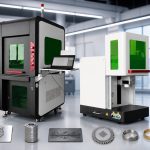
For teams ready to compare configurations and explore real cutting samples, ActionLasers offers a full range of industrial CO2 laser cutting machines — from 60 W desktop units to 150 W+ production platforms. Contact their overseas team for a free sample processing test and a tailored solution proposal.