

Laser cutters for cutting and engraving cast and extruded acrylic
Laser cutting acrylic is an exceptionally popular application for Action Laser machines because of the high-quality results that are produced.
Laser cutting acrylic is an exceptionally popular application for Action Laser machines because of the high-quality results that are produced.
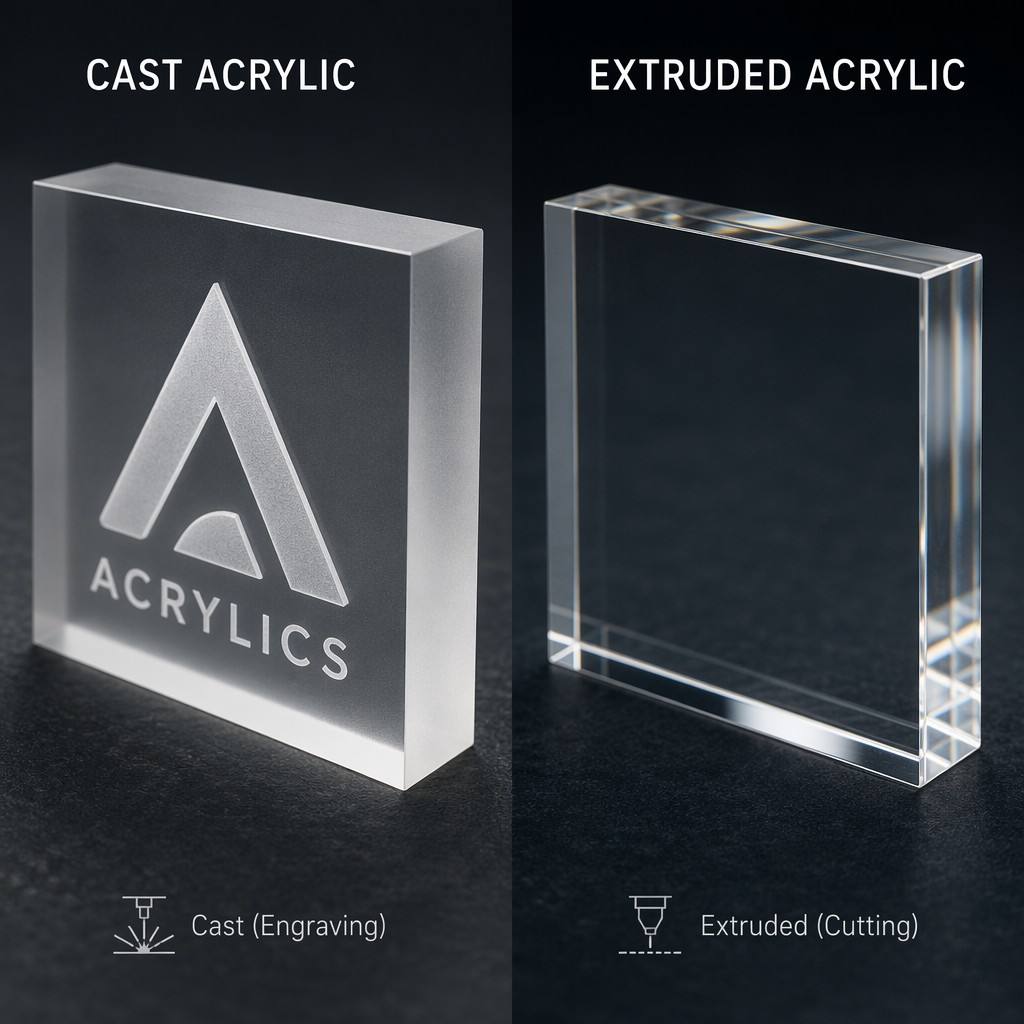
Types of Acrylic – Cast and Extruded
Before beginning to experiment with acrylic in your laser, it’s important to understand the different types of this laser-friendly material. There are two types of acrylics suitable for use with the laser: cast and extruded.
Cast acrylic sheets are made from a liquid acrylic that is poured into molds that can be set into various shapes and sizes. This is the type of acrylic used for most of the awards you see on the market. Cast acrylic is ideal for engraving because it turns a frosty white color when engraved. Cast acrylic can be cut with a laser, but it will not result in flame-polished edges. This acrylic material is better suited for engraving.
The other type of acrylic is known as extruded acrylic, which is a very popular cutting material for signs and promotional products. Extruded acrylic is formed through a higher-volume manufacturing technique, so it is typically less expensive than cast, and it reacts very differently with the laser beam. Extruded acrylic will cut cleanly and smoothly and will have a flame-polished edge when laser cut. But when it is engraved, instead of a frosted look you will have a clear engraving.
2OOW Laser for Thick Cutting & Increased Production
For businesses that need to cut thicker acrylics and produce larger projects, the increased power will help meet production demands.
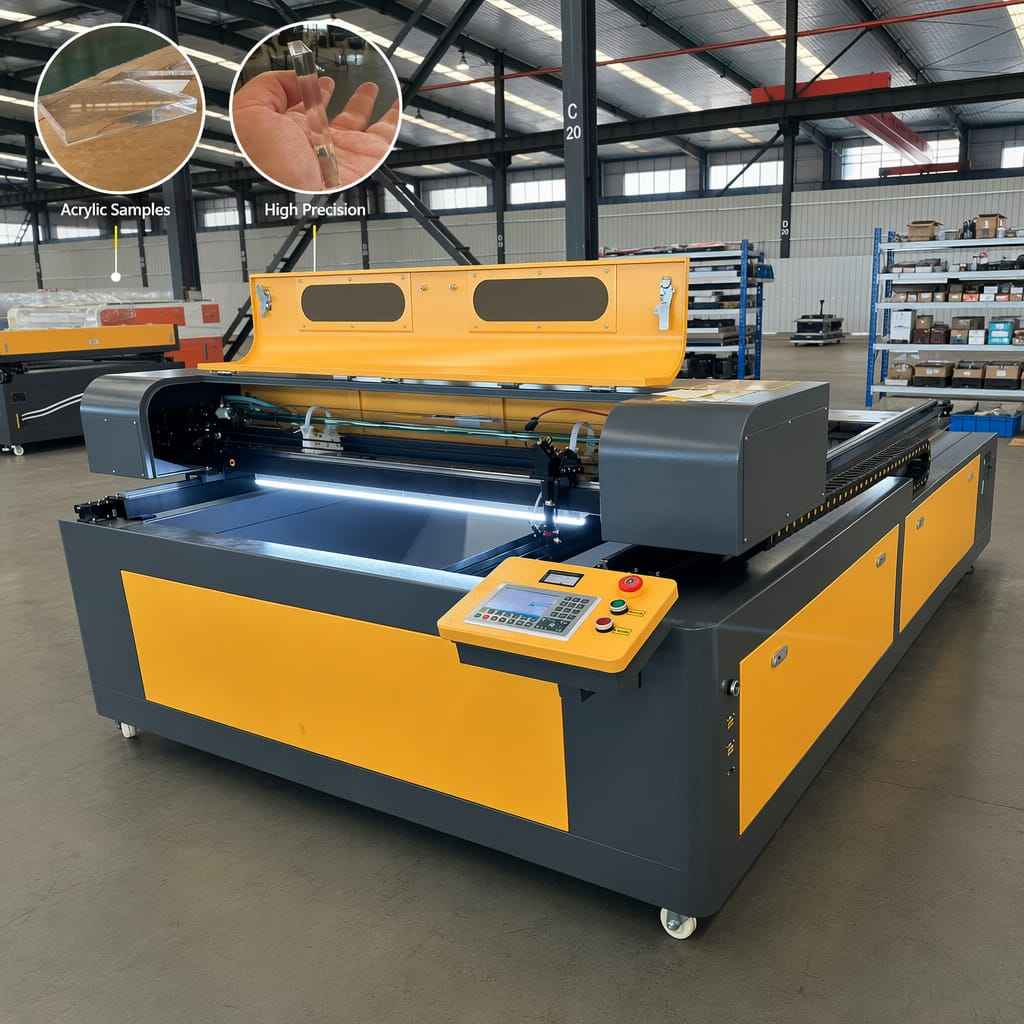
Laser Cutting Acrylic
To achieve the best results when cutting extruded acrylic, you’ll want to elevate the material so that it’s not touching the cutting table. This will greatly reduce backside reflection and the occurrence of grid marks on the material after being laser cut.
Using your laser to create standoffs from wood or acrylic is the perfect way to use your scrap wood and acrylic material to help you get those perfect extruded acrylic cuts for your customers. Creating standoffs or using other techniques allows you to raise and support your acrylic for better cutting edge quality.
How thick of acrylic can you cut?
Cutting results will depend on the laser wattage and material type. These settings are recommended and results may vary slightly.
- As you increase in wattage, you will be able to increase the thickness of acrylic you can laser cut.
- 30W – 40W will cut 1/8″ (3.1 mm) of acrylic.
- 50W – 60W will cut 1/4″ (6.3 mm) of acrylic
- 80W – 100W will cut from to 3/8″ (9.5 mm) with one pass to 1″ (25.4 mm) with two passes.
- 120W system will cut from to 1/2″ (12.7 mm) with one pass to 1″ (25.4 mm) with two passes.
- 200W system will cut from to 3/4″ (19 mm) with one pass to 1″ in. (25.4 mm) with two passes.
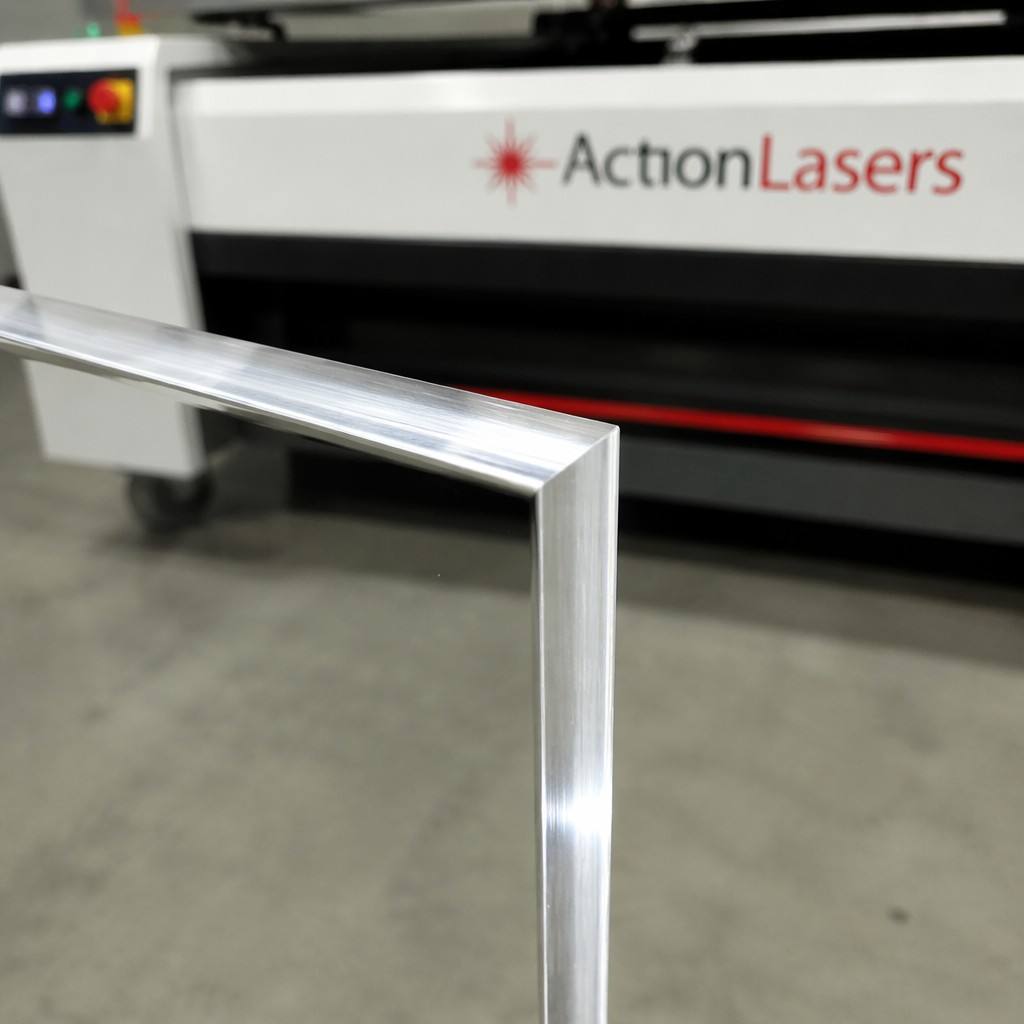
Laser Cutting Text out of Acrylic
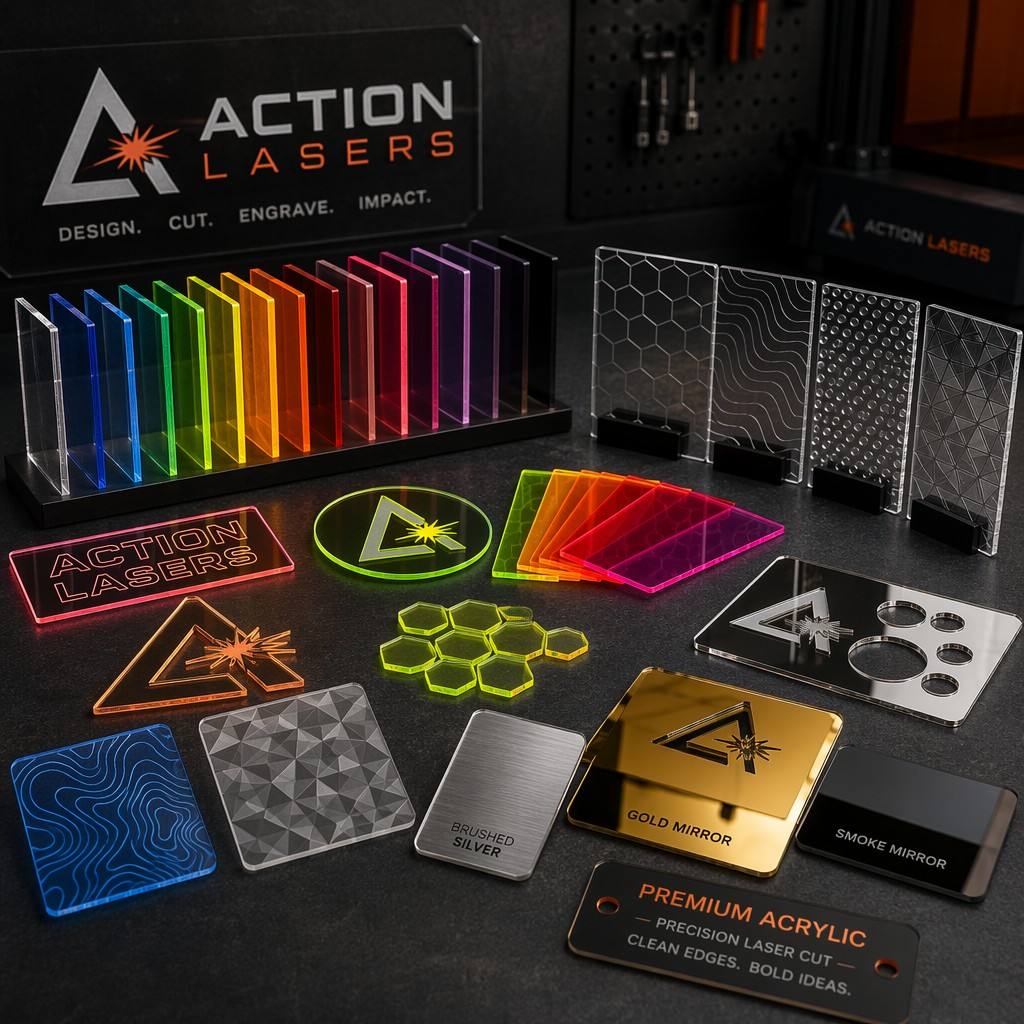
Laser Cutting Text out of Acrylic
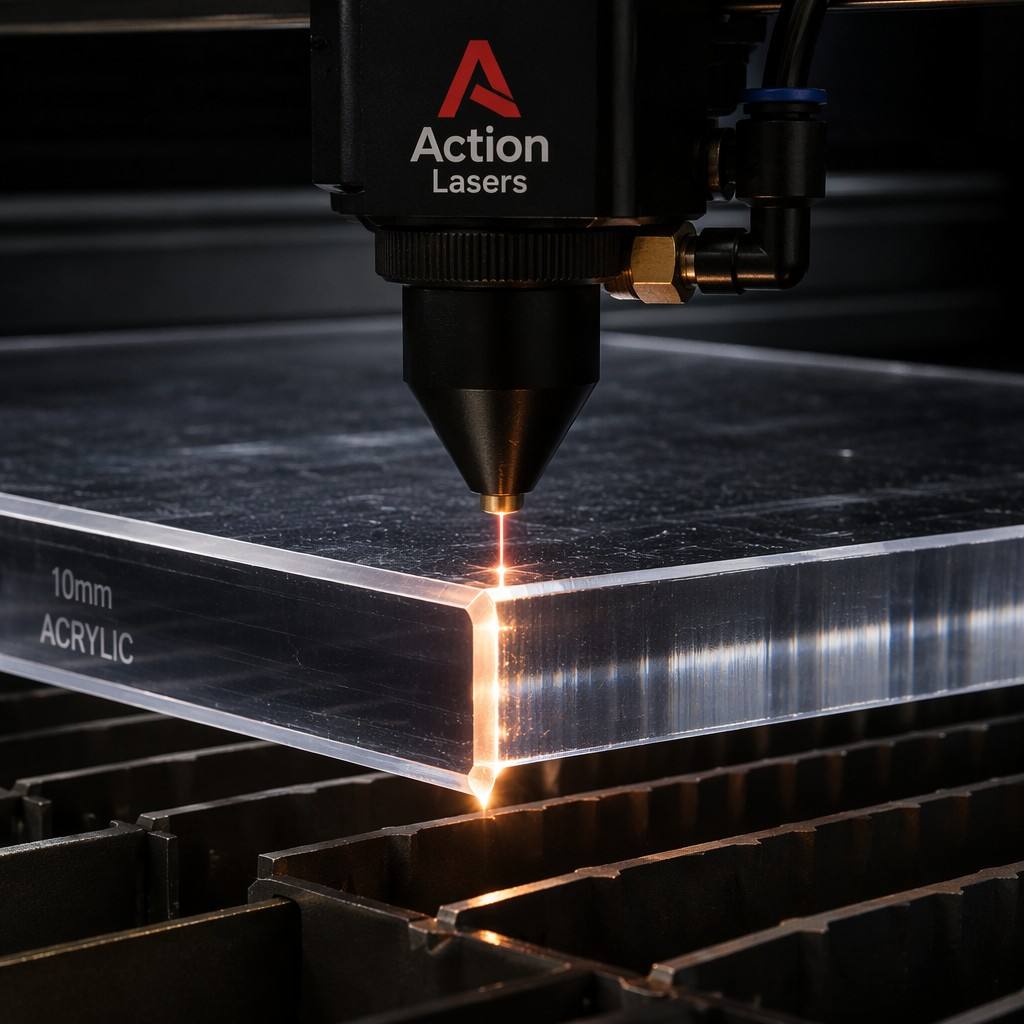
Laser Cutting Text out of Acrylic
Laser Cutting Speeds
Cutting acrylic is usually best achieved with relatively slow speed and high power. This cutting process allows the laser beam to melt the edges of the acrylic and essentially produce a flame-polished edge.
Today, there are a several acrylic manufacturers who produce a variety of both cast and extruded acrylics that feature different colors, textures, and patterns. With so much variety, it’s no wonder acrylic is a very popular material to laser cut and engrave.
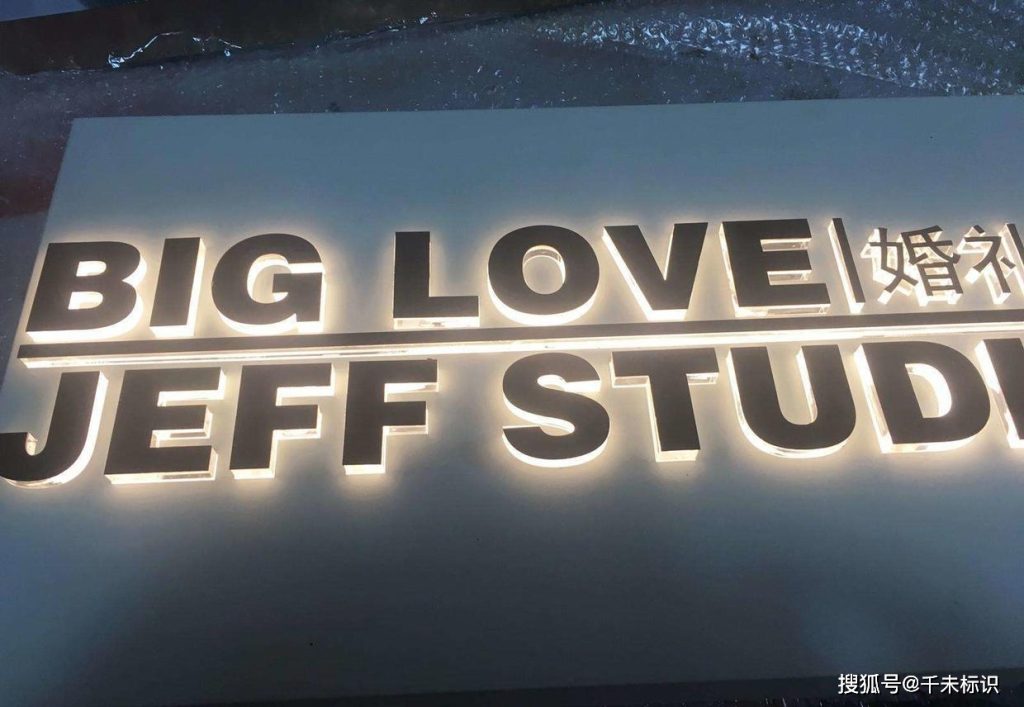
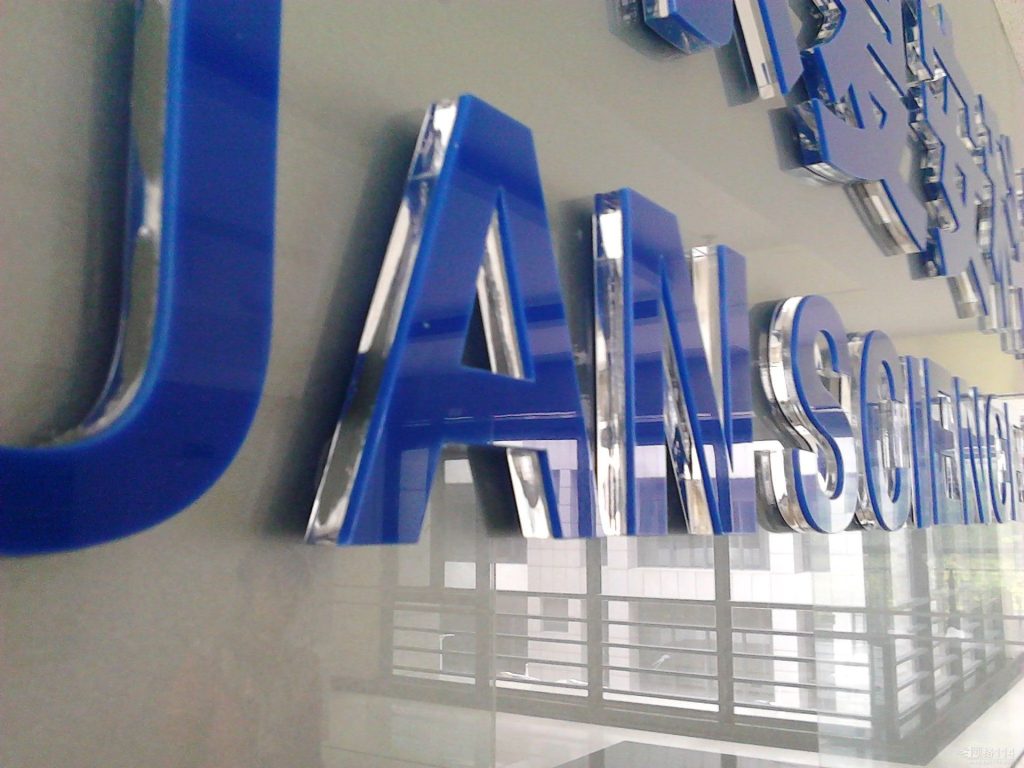
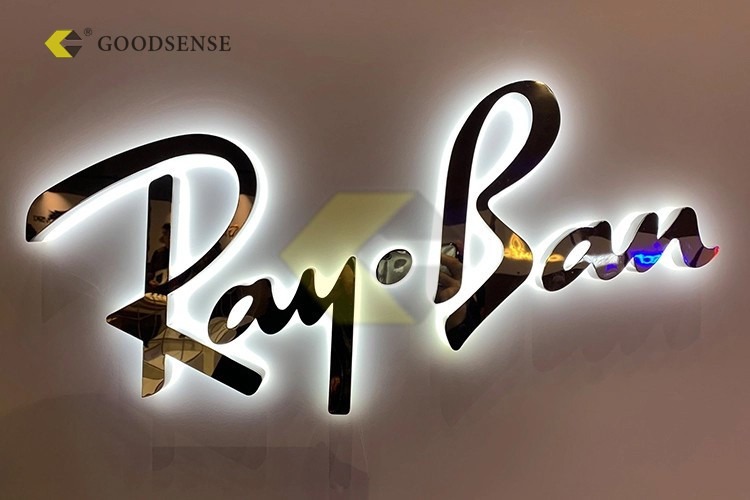
Laser Engraving Acrylic
For the most part, laser users engrave acrylic on the back side to produce a look-through effect from the front. You’ll see this often on acrylic awards.
Acrylic sheets typically come with a protective adhesive film on the front and back to prevent it from getting scratched. We recommend removing the protective adhesive paper from the back of the acrylic before engraving, and leaving the protective cover layer on the front to prevent scratching while handling the material. Don’t forget to reverse or mirror your artwork before sending the job to the laser since you’ll be engraving the back side.
Acrylics generally engrave well at a high speed and low power. It doesn’t take much laser power to mark the acrylic, and if your power is too high you’ll notice some distortion in the material.
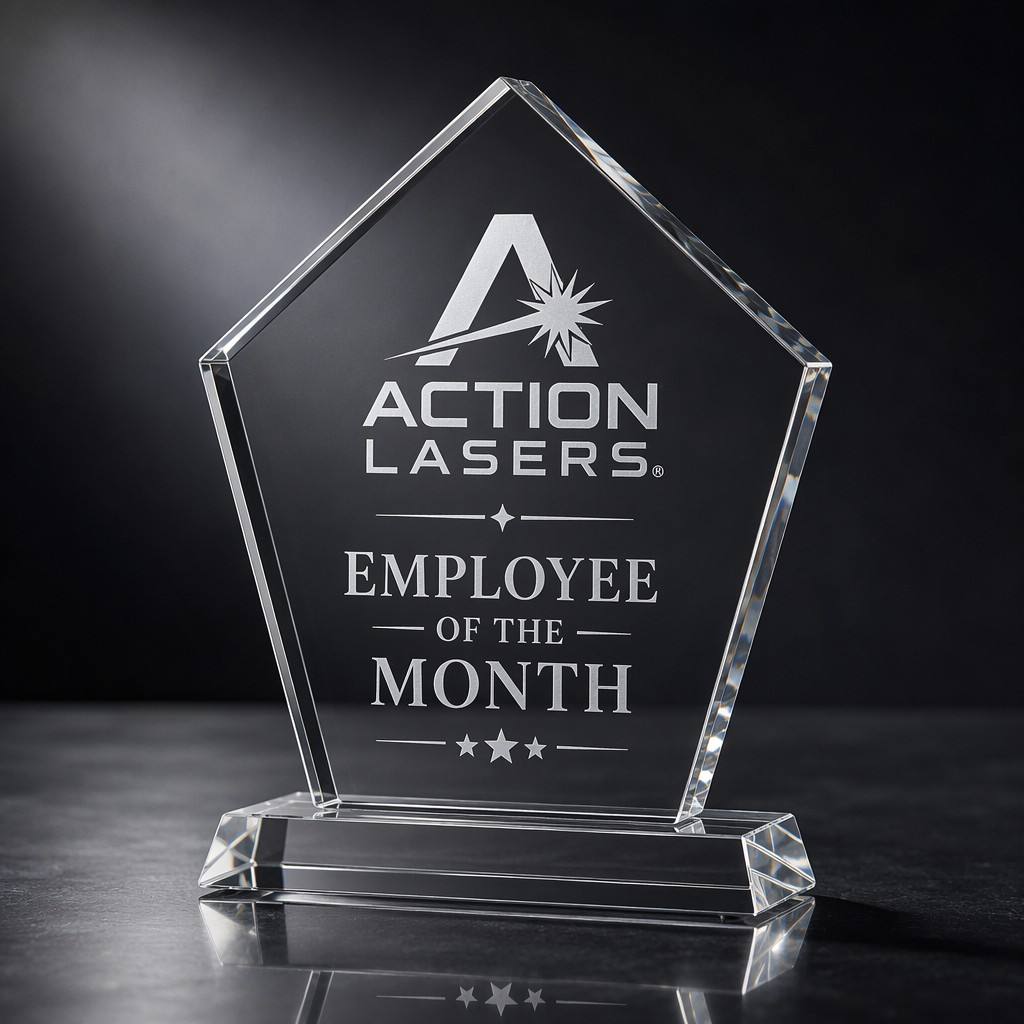
Laser Engraved Acrylic Award
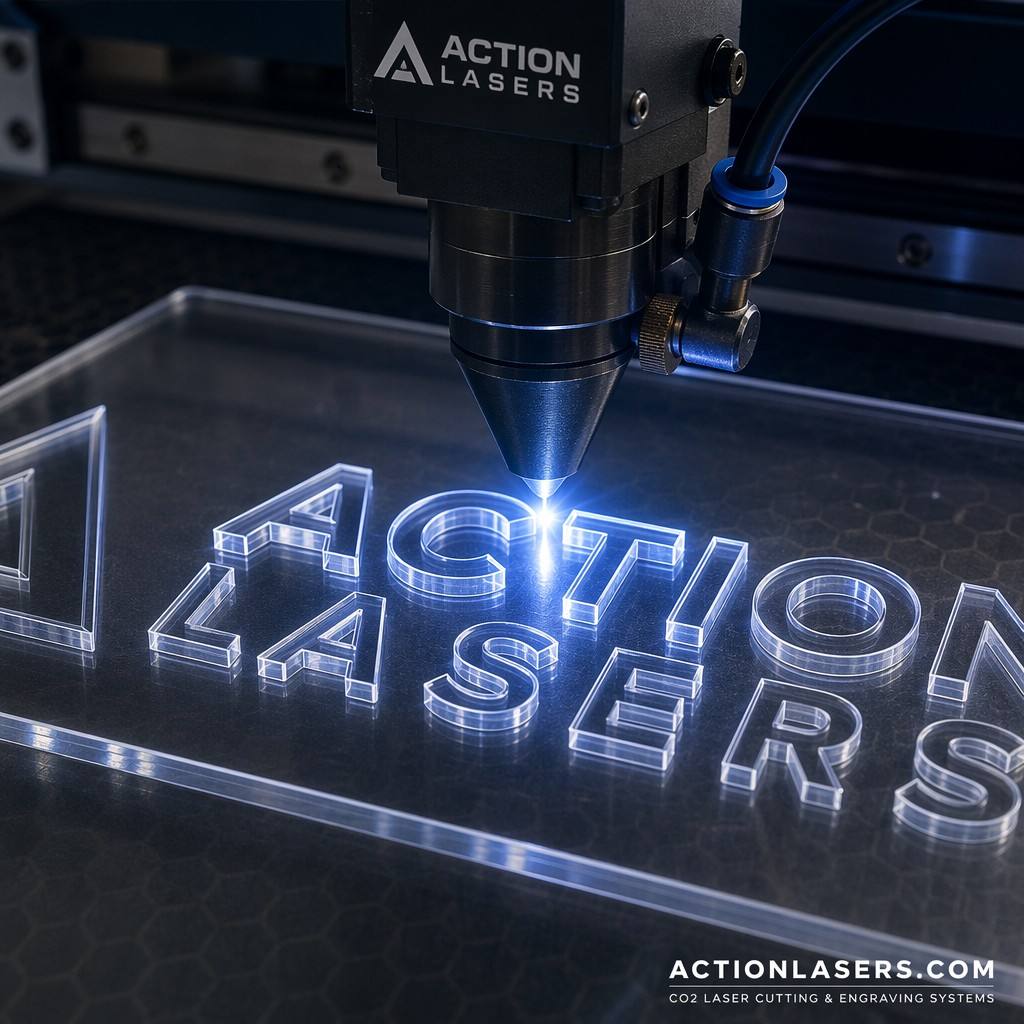
Laser Engraving a Sheet of Acrylic
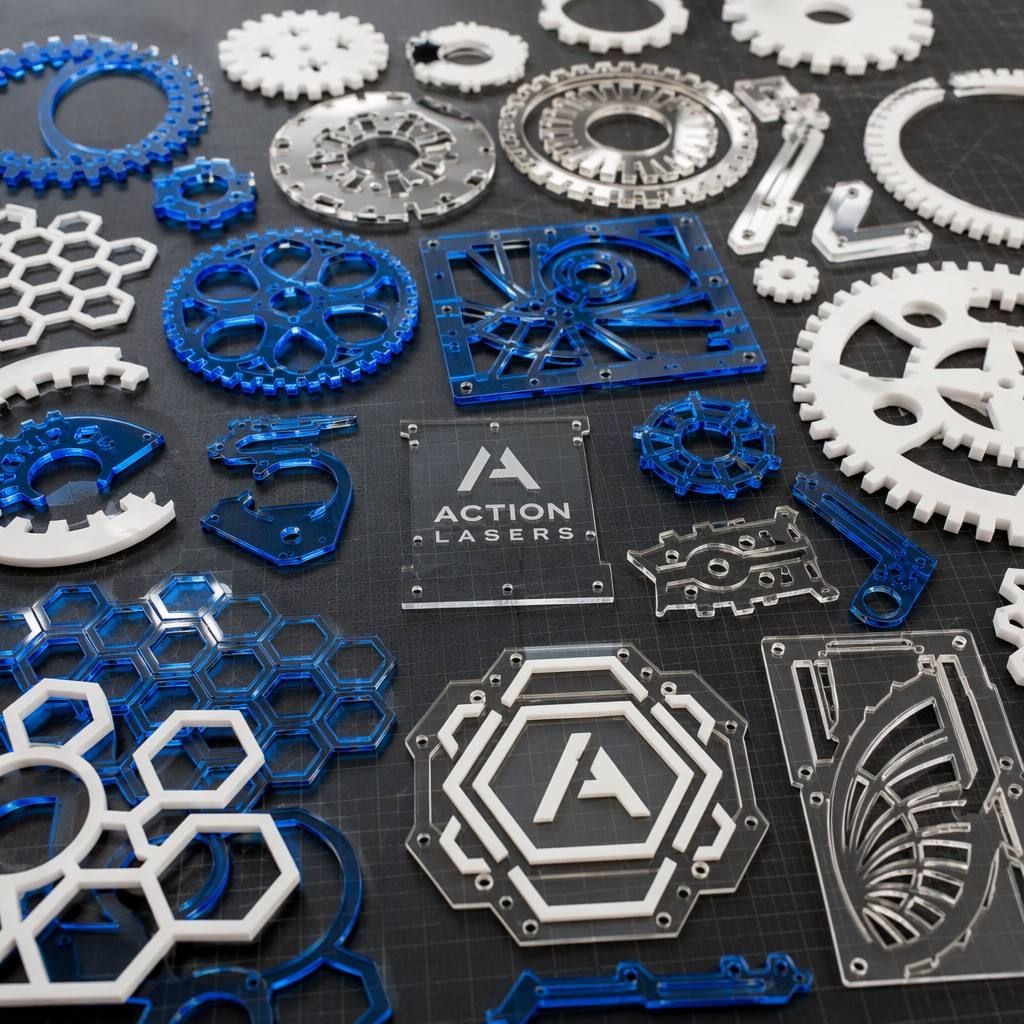
Laser Cutting Graphics out of Acrylic
General Laser Processing Tips For Acrylic
| 1 | Never leave your machine unattended when working with acrylic. Many materials are susceptible to igniting, but acrylic – in all its different forms – has been shown to be especially flammable when cut with the laser. As a general rule, you should never run your laser – using any material – if you are not present. |
| 2 | Make sure to choose the right type of acrylic for your application. Remember, cast acrylic is better for engraving, while extruded acrylic is better suited for laser cutting. |
| 3 | Elevate the acrylic – use an item for support to eliminate backside reflection. |
What types of acrylic projects can you make?
Acrylic is a durable and practical material for laser processing. The variety of colors and textures make this material ideal for all kinds of things:
- As you increase in wattage, you will be able to increase the thickness of acrylic you can laser cut.
- 30W – 40W will cut 1/8″ (3.1 mm) of acrylic.
- 50W – 60W will cut 1/4″ (6.3 mm) of acrylic
- 80W – 100W will cut from to 3/8″ (9.5 mm) with one pass to 1″ (25.4 mm) with two passes.
- 120W system will cut from to 1/2″ (12.7 mm) with one pass to 1″ (25.4 mm) with two passes.
- 200W system will cut from to 3/4″ (19 mm) with one pass to 1″ in. (25.4 mm) with two passes.
Which machines are best for laser cutting and engraving acrylic?
Whatever the scope of your acrylic project, Action Laser has a machine that will fit your needs, from entry-level systems to top-of-the line machines.
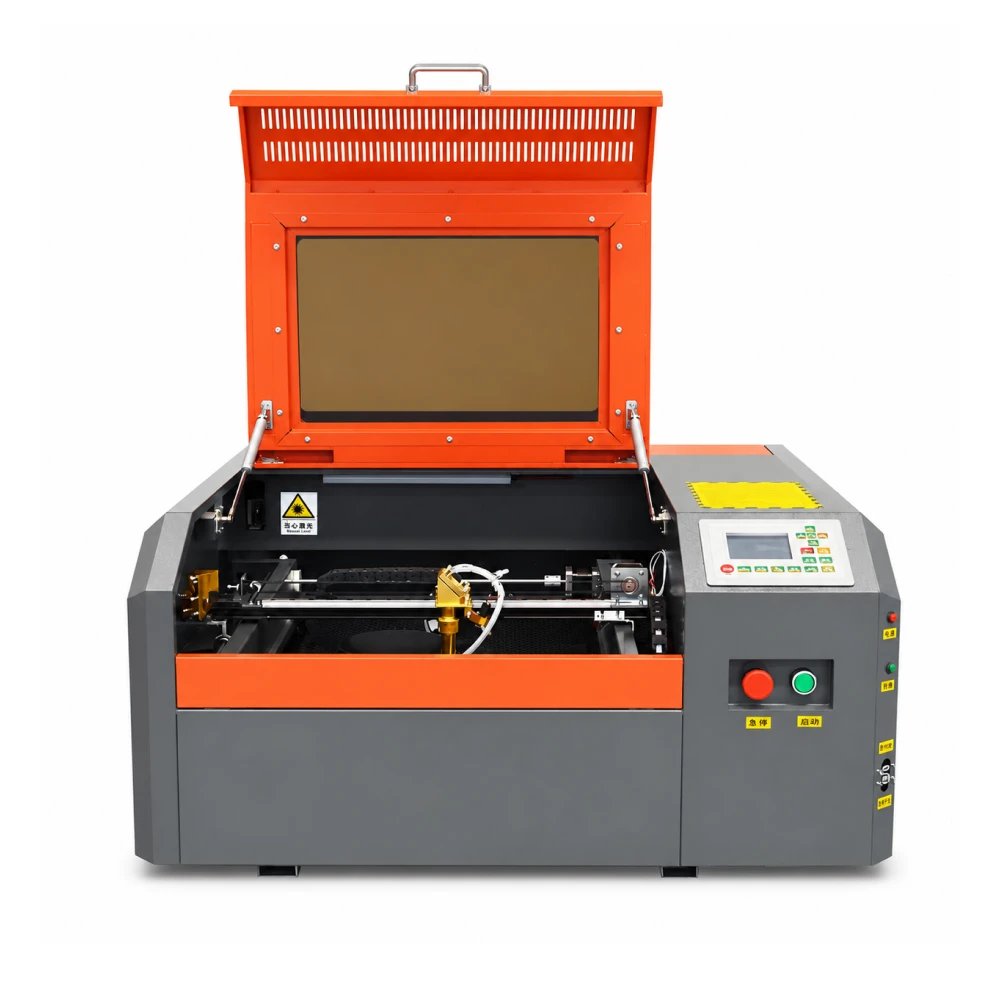
CO2 Laser Marking Machine Desktop 3020 for Business
- 40W/50W CO₂ laser power
- 300×200mm working area
- 0.01mm locating precision
- Red-light positioning system
- Water cooling protection
- CE & RoHS certified
- 1-year warranty, 6-month on laser tube
- CO2 laser marking machine
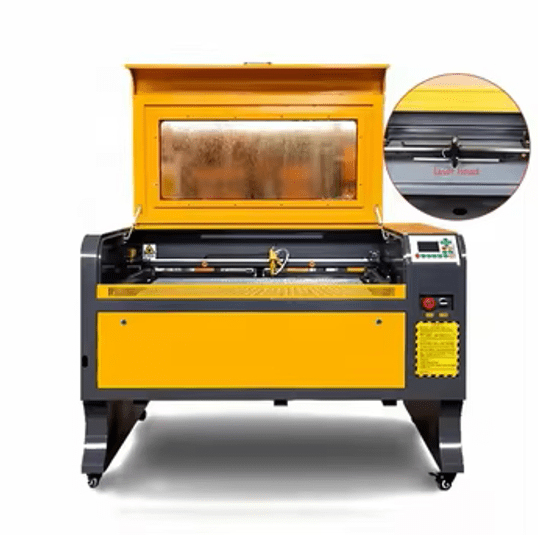
CO2 Laser Marking Machine 9060/1080/1310
- CO2 laser marking machine, 9060/1080/1310 models
- 60W-150W power options, 900×600 to 1300×1000mm working area
- ≤0.01mm red light positioning precision
- Sealed CO2 laser tube with water cooling protection
- Electric lifting platform 0-200mm
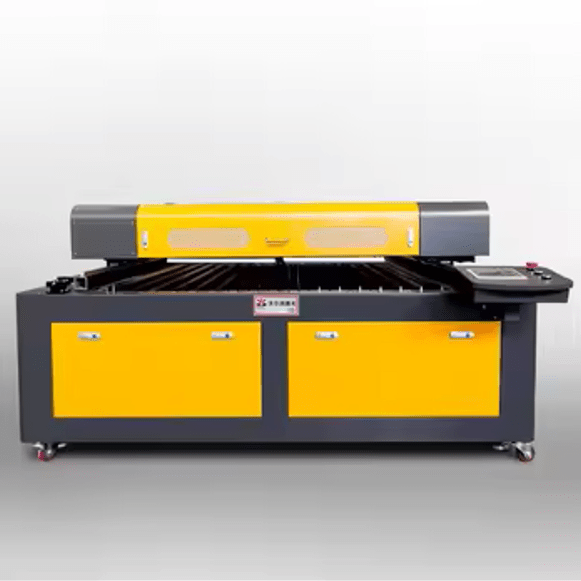
CO2 Laser Marking Machine H1325/H1390
- 60/80/100/130/150W CO2 laser marking machine
- 1300×2500mm large-format working area
- Water cooling protection for 24hr continuous operation
- Red light positioning ≤0.01mm
- Export-standard carton/plywood packaging
- Lifelong after-sales service
Top 10 FAQs for Acrylic Laser Engraving & Cutting
A CO2 laser is absolutely essential for working with acrylic. Diode lasers, often found in cheap hobbyist machines, operate at a wavelength that simply passes straight through clear, blue, and transparent acrylics without interacting with the material. Action’s professional CO2 laser tubes operate at a 10.6-micron wavelength, which is absorbed perfectly by all colors and types of acrylic, allowing for deep, highly detailed engravings and flawlessly smooth cuts every time.
These two manufacturing methods produce very different results under a laser. Cast acrylic is the premier choice for engraving because it produces a beautiful, frosty white contrast that stands out clearly. Extruded acrylic, on the other hand, will engrave clear rather than frosted, making it less ideal for text or logos. However, extruded acrylic cuts exceptionally well and is often cheaper. An Action Laser allows you to dial in exact speed, power, and frequency settings to maximize the unique benefits of either material.
Not if you are using the right machine and settings. One of the greatest advantages of using a high-quality CO2 system like an Epilog Laser is the ability to achieve a “flame-polished” edge straight off the machine. By using the right combination of a cutting speed, high power, and a high frequency (PPI/Hz) setting, the laser melts the acrylic edge as it cuts, leaving it crystal clear and perfectly smooth, with no manual sanding or flame-treating required.
It depends on the operation. When cutting acrylic, you should generally leave the masking on both sides to protect the surface from heat residue and scratch marks. When engraving, you must remove the masking from the top surface; otherwise, you will be engraving the paper, leaving sticky adhesive residue in your delicate frosted design. ActionLasers’s advanced Air Assist system helps blow away vaporized material, keeping unmasked acrylic surfaces clean and clear during operation.
This is entirely dependent on the wattage of your laser tube. A 30W to 40W system is excellent for 1/8″ to 1/4″ acrylic sheets. If you need to cut thick 1/2″ or 3/4″ acrylic display blocks, you require serious power to cut cleanly in a single pass without warping the material. ActionLasers offers robust systems with up to 120 watts of CO2 power, allowing you to slice through thick acrylic efficiently, expanding the range of products you can offer.
Warping and excessive melting happen when too much heat builds up in the material, usually caused by moving the laser too slowly or utilizing poor exhaust. High-speed servo motors, like those found on the ActionLasers Fusion Pro series, allow the laser to move rapidly across the material, instantly vaporizing the acrylic rather than lingering and transferring heat to the surrounding area. Proper airflow beneath the material, using an ActionLasers vector-cutting grid, also prevents heat buildup.
Yes. Because cast acrylic vaporizes so cleanly, you can achieve stunning 3D reliefs and multi-depth engravings. ActionLasers’s advanced print driver includes a 3D engraving mode that automatically adjusts the laser’s power based on the grayscale values of your artwork. Darker areas of your design will engrave more deeply, while lighter areas will engrave less deeply, creating a tactile, sculptural effect within the acrylic.
Absolutely. Vaporizing acrylic creates strong fumes and microscopic particles. Cutting without proper ventilation is a severe health hazard and will rapidly degrade your machine by coating the optics and mechanics in a sticky residue. Action lasers are designed to seamlessly integrate with high-capacity exhaust fans or standalone, multi-stage air filtration units, ensuring a safe work environment and a clean, long-lasting machine.
Wasting expensive acrylic blanks due to misalignment eats into your profit margins. Traditional framing methods are slow and prone to error. ActionLasers solves this completely with the IRIS™ Camera Positioning System. Overhead cameras provide a real-time, high-definition view of your laser bed directly on your screen. You can virtually drag and drop your artwork perfectly onto your acrylic blank, guaranteeing precision placement on the first try.
If you are running a business, time is your most valuable asset. Budget diode or glass-tube CO2 lasers are notoriously slow, require constant mirror alignment, and suffer from frequent downtime. An Action Laser features a rugged, industrial chassis, permanent optic alignment, and metal/ceramic laser tubes designed for 24/7 continuous operation. The initial investment is rapidly offset by the sheer speed of production, unmatched reliability, and the premium quality of the finished acrylic products you can sell.