

Introduction: What Is a CO2 Laser Cutting Machine?
A CO2 laser cutting machine is a piece of industrial equipment that uses a high-power infrared beam generated from a carbon dioxide gas mixture to cut, engrave, and mark materials with extreme precision. Unlike mechanical cutting tools that rely on blades or routers, a CO2 laser cutter delivers a non-contact process — the focused beam melts, burns, or vaporizes material along a programmed path, producing clean edges with minimal mechanical stress on the workpiece. If you are asking “what is co2 laser cutting machine” and whether it fits your factory, the answer starts with wavelength physics.
CO2 lasers operate at a wavelength of 10.6 µm, which is strongly absorbed by organic and polymer materials. This makes an industrial co2 laser cutter especially effective for cutting wood, acrylic, plastics, textiles, leather, paper, and even thin metals. In industrial settings, a CO2 laser cutting machine is valued for its combination of speed, edge quality, and material versatility — qualities that have made it a standard fixture in workshops across industries ranging from signage and furniture to automotive and aerospace.
If you are evaluating a laser cutter machine for your production line, understanding what a CO2 laser can and cannot do is the first step toward making the right capital investment.
How Does a CO2 Laser Cutting Machine Work?
A CO2 laser cutting machine generates light by passing an electrical discharge through a sealed tube filled with a gas mixture — primarily carbon dioxide (CO₂), nitrogen (N₂), and helium (He). The electrical excitation raises the CO₂ molecules to a higher energy state. When they return to their ground state, they emit photons at 10.6 µm — far-infrared light invisible to the human eye.
These photons bounce between mirrors at each end of the laser tube, amplifying the beam. Once the beam reaches sufficient power, it is directed through a series of mirrors and focused through a lens onto the material surface. The focused spot can reach power densities exceeding 1,000 W/mm², enough to instantly vaporize most non-metallic materials at the point of contact.
The motion system — typically a gantry with servo or stepper motors — moves the cutting laser co2 head or the cutting bed along X and Y axes, following the programmed cutting path. Modern industrial CO2 laser cutter systems also include automatic focus adjustment, rotary attachments for cylindrical workpieces, and dual-table configurations that allow one bed to be loaded while the other is cutting, maximizing throughput.
The wall-plug efficiency of a CO₂ laser — the rate at which it converts electrical power into optical power — ranges from 10% to 20%, according to the RP Photonics Encyclopedia of Laser Physics and Technology. While lower than fiber lasers, this efficiency level is still respectable for gas lasers and is offset by the CO₂ laser’s superior performance on non-metallic materials.
Key Components of an Industrial CO2 Laser Cutter
Every industrial co2 laser cutter system shares a common set of core components. Understanding them helps buyers evaluate build quality and long-term reliability when selecting a CO2 laser cutting machine:
- Laser tube (resonator): The heart of the machine. Glass DC tubes are common in entry-to-mid-range machines (40–150 W); RF-excited metal-ceramic tubes are used in higher-power industrial systems for their longer lifespan and better beam stability.
- Beam delivery system: A set of gold-coated or silicon mirrors that guide the beam from the tube to the cutting head. Mirrors gradually degrade and require periodic cleaning or replacement.
- Focusing lens: Typically made of ZnSe (zinc selenide), which is transparent to 10.6 µm light. Lens focal length determines the kerf width and maximum material thickness, with common focal lengths of 2.0″, 2.5″, and 4.0″.
- Cutting head and nozzle: Directs the focused beam and the assist gas (compressed air, oxygen, or nitrogen) onto the cut line. The assist gas blows away molten material and improves edge quality.
- Motion system: Gantry-style XY table driven by stepper or servo motors with linear guides. Servo systems offer higher speed and positional accuracy for complex curved cuts.
- Control unit: Runs the machine firmware and processes the G-code or vector file. Top-tier machines support real-time power modulation.
- Exhaust and cooling: A fume extraction system removes smoke and particulates; a water chiller or air-cooling unit maintains the laser tube at safe operating temperature.
Higher build quality in these components directly translates into tighter cut tolerances, less downtime, and a longer service life — typically 2,000–10,000 hours for a glass tube and up to 25,000+ hours for an RF tube.
CO2 Laser Power Levels and Their Applications
Choosing the right power level for your laser cutter machine is critical. Too little power forces multiple passes and slows production; too much power wastes energy and risks burning thin materials. The table below shows typical power ranges and their primary applications for a CO2 laser cutting machine:
| Power Range | Typical Tube Type | Max Acrylic Thickness | Max Plywood Thickness | Primary Applications |
|---|---|---|---|---|
| 40–60 W | Glass DC | 5–8 mm | 3–5 mm | Hobby/small workshop, engraving, thin material cutting, craft production |
| 80–100 W | Glass DC | 8–12 mm | 8–13 mm | Signage, small-batch acrylic fabrication, light industrial use |
| 130–150 W | Glass DC / RF | 15–25 mm | 15 mm | Industrial-grade cutting of thick acrylic and wood, medium-volume production |
| 180–300 W | RF metal-ceramic | 25–40 mm | 15–20 mm | Heavy-duty industrial cutting, thick non-metal sheets, high-throughput lines |
| 4–6 kW | Fast-flow / slab CO₂ | N/A (metal focus) | N/A | Metal cutting (stainless steel, mild steel up to 20–25 mm with O₂ assist) |
Data source: Based on published manufacturer specifications from iGoldenLaser and Xometry — CO₂ Laser Power & Thickness Reference.
For most buyers, the sweet spot is 80–150 W, which covers the bulk of signage, furniture, packaging, and acrylic fabrication tasks that a typical CO2 laser cutter handles daily.
What Materials Can a CO2 Laser Cutter Process?
A major reason manufacturers invest in a CO2 laser cutting machine is its ability to handle a broad range of materials that other laser types struggle with. Below we break down the three most common material groups.
CO2 Laser Cutter for Wood
Wood is one of the most popular materials for CO₂ laser processing. A co2 laser cutter for wood can cut plywood, MDF, solid hardwoods, and even bamboo with a clean char-free edge when settings are dialled in correctly. Typical cutting speeds for a co2 laser wood cutting application range from 1,000–9,000 mm/min depending on thickness and power. For example, an 80 W CO₂ laser cuts 5 mm plywood in a single pass at roughly 1,500–2,000 mm/min, producing a slight darkening along the cut line that many furniture designers actually prefer as a finished aesthetic.
Co2 laser wood cutting is widely used in furniture manufacturing, architectural model-making, wooden signage, decorative panels, and custom cabinetry. The key advantage over routing or sawing is that no tool wear occurs — the same co2 laser cutter for wood cuts equally well through knotty hardwood and soft pine without changing tools.
CO2 Laser Cutter for Acrylic
If you work with acrylic, a co2 laser cutter acrylic setup is almost certainly the right choice. Acrylic absorbs the 10.6 µm wavelength extremely well, which means the co2 laser for cutting acrylic cuts cleanly rather than melting the material into rough edges. A co2 laser cutter acrylic system can achieve flame-polished edges on cast acrylic — a finish that would otherwise require a secondary polishing step.
Cast acrylic produces clearer edges than extruded acrylic, which tends to frost during laser cutting. For a 60 W CO₂ laser, the practical limit for single-pass cutting is about 8–10 mm of cast acrylic; a 150 W machine can push through 20–25 mm in one pass. Air assist pressure is critical — too high and the edge turns rough, too low and the acrylic flares up. Many operators set the assist pressure at the level that feels “strongest you can blow on your finger without discomfort.”
Applications include acrylic signage, retail displays, point-of-purchase fixtures, awards and trophies, aquarium panels, and lighting diffusers — all of which benefit from a dedicated CO2 laser cutting machine.
CO2 Laser for Cutting Other Non-Metals
The versatility of a CO2 laser cutting machine extends well beyond wood and acrylic. Industrial CO₂ lasers routinely cut:
- Plastics: ABS, polycarbonate, polypropylene, PET, and nylon — though some (e.g., PVC) release corrosive chlorine gas and must be avoided or processed only with special ventilation.
- Textiles and fabrics: Polyester, felt, canvas, silk, and denim. Laser cutting seals fabric edges simultaneously, preventing fraying — a major advantage in garment and upholstery production.
- Leather and rubber: Ideal for gasket cutting, footwear components, watch straps, and leather goods. No mechanical pressure means no distortion of the material.
- Paper and cardboard: Packaging prototypes, greeting cards, stickers, and bookbinding — done at very high speeds (often exceeding 10,000 mm/min at low power).
Can a CO2 Laser Cut Metal?
Yes, but with important limitations. A standard 100–150 W CO₂ laser cannot cut metal — the power density is too low. However, a co2 laser cut metal machine with a high-power fast-flow CO₂ laser (4–6 kW) can cut through mild steel up to 20–25 mm and stainless steel up to 12–15 mm when oxygen is used as the assist gas. This was the dominant technology for sheet metal cutting before fiber lasers took over.
For thin metals (≤1 mm), some mid-range CO2 laser cutting machines with 150–300 W can mark or score, but they cannot cut through reliably. The lesson here: if your primary business is metal fabrication, a fiber laser is a better investment. If your work is mostly non-metals with occasional thin-metal marking, an industrial co2 laser cutter will still serve.
CO2 Laser vs. Fiber Laser: Key Differences at a Glance
Buyers often compare a CO₂ laser cutter against a fiber laser when planning equipment purchases. The table below summarizes the practical differences for anyone choosing between a CO2 laser cutting machine and a fiber alternative:
| Parameter | CO2 Laser (10.6 µm) | Fiber Laser (~1.06 µm) |
|---|---|---|
| Best for | Wood, acrylic, plastics, textiles, leather, paper, thin metals (high-power only) | Metals (steel, aluminum, brass, copper), reflective materials |
| Cut quality on non-metals | Excellent — clean, polished edge on acrylic; minimal char on wood | Poor — wavelength not absorbed by organics; cannot cut clear acrylic |
| Cut speed (thin metal ≤5 mm) | Moderate | 3–5× faster |
| Wall-plug efficiency | 10–20% | 25–35% |
| Typical tube/source lifetime | 2,000–10,000 h (glass); up to 25,000 h (RF) | 50,000–100,000 h |
| Upfront cost (per watt) | Lower — $5,000–$50,000 for most industrial units | Higher — often 5–10× the CO₂ price for equivalent power |
| Operating cost | Higher (more power draw, consumable lenses/mirrors, gas refill on some models) | Lower (less electricity, minimal consumables, diode maintenance only) |
| Maintenance | Mirror alignment, lens cleaning, tube replacement, water chiller upkeep | Minimal — sealed source; occasional cleaning of optics |
Sources: Xometry CO₂ vs. Fiber Laser Comparison; RP Photonics Encyclopedia.
In short, neither technology is universally superior. If your product mix is 80%+ non-metals, a CO₂ laser cutter is the right tool. If you cut mostly metal, fiber is the better long-term choice.
Industrial Applications of CO2 Laser Cutting Machines
The versatility of an industrial co2 laser cutter makes it indispensable across several manufacturing sectors:
- Signage and advertising: Acrylic lettering, illuminated channel letters, dimensional signs, and display stands — CO₂ lasers are the de facto standard in this industry. A CO2 laser cutter acrylic system can cut and engrave in one setup, saving a complete production step.
- Furniture and interior design: CO2 laser wood cutting produces inlaid decorative panels, custom cabinet doors, fretwork, and wooden toys. No sanding or edge banding is needed for most internal-cut parts.
- Automotive interiors and trim: Laser-cut fabric, leather seat covers, dashboard overlays, and carpet mats — CO₂ lasers seal edges and allow intricate contour cutting without physical dies.
- Packaging and prototyping: Cardboard and corrugated board cutting for custom packaging mockups, pop displays, and folding carton samples. Speed and low setup cost make a laser cutter machine ideal for short-run production.
- Textile and garment manufacturing: Single-ply or multi-ply cutting of synthetic fabrics, denim, and felt. Laser cutting eliminates fraying and enables micro-perforations for breathability in sportswear.
- Aerospace composites: Cutting carbon-fiber-reinforced polymer (CFRP) prepreg and Kevlar — CO₂ lasers deliver clean edges with minimal delamination when parameters are optimized.
- Electronics and gasket cutting: Precision cutting of silicone gaskets, rubber seals, Mylar insulators, and polyimide films for circuit-board manufacturing.
How to Choose the Right Industrial CO2 Laser Cutter
Selecting a laser cutter machine for your workshop involves more than comparing wattage. Consider these factors systematically when shopping for a CO2 laser cutting machine:
- Material thickness and type. Determine the thickest material you will cut regularly, then choose a power level at least 30% above that requirement — this gives you a buffer for production speed and tougher materials.
- Bed size. A 600 × 900 mm bed (6090 or 9060 format) suits small shops and sign makers. A 1,300 × 900 mm bed (1390 format) is the most common industrial size for a CO2 laser cutter. Larger formats like 1,300 × 2,500 mm exist for bulk plywood or acrylic sheet processing.
- Tube type. Glass DC tubes are affordable and easy to replace but have shorter lifespans and power drift over time. RF metal-ceramic tubes cost more upfront but maintain stable power output for years — choose RF if you run 8+ hour daily shifts on your industrial co2 laser cutter.
- Motion control. Stepper motors are adequate for most cutting tasks. Servo motors are better for high-speed applications and fine detailing at high feed rates.
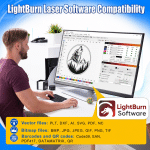
- Software and compatibility. Look for machines that accept standard vector formats (DXF, AI, SVG, PLT) and provide a control interface with adjustable power/speed presets per material. LightBurn and RDWorks are common in the industry.
- After-sales support. A CO2 laser cutting machine is a production asset. Check the supplier’s spare parts availability, technical support response time, and whether on-site training is offered.
For teams ready to evaluate specific models, exploring our range of CO2 laser cutting machines — from 60 W desktop units to 150 W industrial platforms — will help you compare configurations side by side.
Conclusion
A CO2 laser cutting machine is one of the most versatile production tools a modern workshop can own. From co2 laser wood cutting in furniture fabrication to precision acrylic lettering in signage and custom textile cutting in apparel, this laser cutter machine delivers clean edges, high repeatability, and non-contact processing that mechanical methods cannot match.
The key takeaway: match the machine to your material. If your production revolves around non-metallic materials — and especially if acrylic, wood, or textiles dominate your workflow — a CO₂ laser cutter offers the best combination of cut quality and upfront cost. Higher-power industrial CO2 laser cutting units (4–6 kW) can also handle metal cutting, though fiber lasers have largely taken over that segment.
We recommend requesting a free sample processing test with your actual materials before making a purchase decision — this ensures the CO2 laser cutting machine’s power and settings align with your quality expectations. Our technical team can provide a customized solution proposal based on your production volume, material types, and floor layout.