

Fiber laser marking is the most widely adopted precision permanent marking technology in modern industrial manufacturing, designed to create high-resolution, wear-resistant identifiers on metal and rigid non-metal surfaces. As global supply chains tighten traceability requirements and intelligent manufacturing upgrades accelerate, fiber laser marker systems have become standard production equipment for automotive, electronics, aerospace and medical device factories worldwide.
Unlike traditional ink printing, mechanical engraving or chemical etching, this technology delivers contactless, consumable-free marking with consistent quality for both small-batch customization and high-volume mass production. This 2026 technical guide breaks down every core aspect of the technology to help engineering and procurement teams make informed sourcing decisions.
How Does Fiber Laser Marking Work? (Core Technical Principle)
Core Component Architecture
A standard industrial fiber laser marking machine is built around three core systems:
- Fiber laser source: Uses ytterbium-doped optical fiber as the gain medium, pumped by laser diodes to generate a high-energy 1064nm near-infrared laser beam. This is the core component that determines marking quality and equipment service life.
- Galvanometer scanning system: Guides the focused laser beam to move precisely on the target material surface, controlling marking path, speed and positioning accuracy.
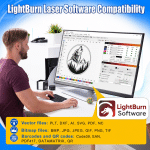
- Control software system: Converts graphics, text, barcodes and serial numbers into digital motion signals, enabling fully automated marking operations.
Physical Marking Mechanism
When the focused high-energy laser beam acts on the material surface, it triggers controlled physical or chemical changes to form permanent identifiers:
- For most metals: Local surface melting and oxidation create contrast differences, or micro-etching forms concave-convex textures.
- For engineering plastics: Laser energy breaks molecular bonds on the material surface, producing color-changing marking without damaging substrate integrity.
- For coated materials: The laser removes the surface coating precisely to expose the base material, forming clear patterns or text.
All processes are completed in milliseconds without contact pressure, eliminating workpiece deformation and tool wear common in traditional processing methods.
Standard Technical Specifications of Industrial Fiber Laser Marking Machines
Industrial-grade fiber laser marking machines follow unified global performance benchmarks defined by the Laser Institute of America (LIA) for industrial laser processing equipment. Below are standard parameters for mainstream production models:
| Specification | Standard Benchmark |
| Laser wavelength | 1064nm (near-infrared) |
| Common power ratings | 20W, 30W, 50W, 100W |
| Repeat positioning accuracy | ±0.001mm |
| Maximum linear marking speed | Up to 12,000mm/s |
| Minimum line width | 0.01mm |
| Average laser source service life | 100,000+ operating hours |
| Cooling method | Air cooling (standard low-power models) |
| Supported marking content | Text, logos, 1D/2D barcodes, serial numbers, traceability codes |
Thanks to air-cooled design and integrated fiber structure, most standard fiber laser marking machines can operate stably in 5-40°C factory environments without additional water cooling systems, significantly reducing deployment and maintenance thresholds.
Fiber Laser Marking vs. CO2 & UV: Full Performance Comparison
When selecting industrial marking equipment, factories usually compare three mainstream laser technologies. The table below provides a full dimensional comparison to help match material and production requirements:
| Performance Dimension | Fiber Laser Marking | CO₂ Laser Marking | UV Laser Marking |
| Operating wavelength | 1064nm (near-infrared) | 10.6μm (far-infrared) | 355nm (ultraviolet) |
| Core applicable materials | Carbon steel, stainless steel, aluminum alloy, hard engineering plastics, coated materials | Wood, acrylic, leather, paper, soft plastics | Glass, ceramic, semiconductor wafers, delicate medical polymers |
| Marking precision | ±0.001mm | ±0.01mm | ±0.003mm |
| Photoelectric conversion rate | 30%+ | 8-10% | 3-5% |
| Average laser service life | 100,000+ hours | 20,000-30,000 hours | 15,000-20,000 hours |
| Typical maintenance cost | Low (no consumables, routine lens cleaning only) | Medium (regular water quality maintenance, gas tube replacement) | High (precision optical component replacement) |
| Energy consumption level | Low (≈600W total power for 20W model) | High (≈3000W for 50W model) | Medium-high |
(Data reference: U.S. Department of Energy Advanced Manufacturing Office, Industrial Laser Energy Efficiency Benchmark Report, https://www.energy.gov/eere/advanced-manufacturing-office)
For most metal processing and general industrial marking scenarios, fiber laser marking machines deliver the best balance of precision, efficiency, service life and total cost of ownership, making them the first choice for mass production lines.
Key Applications of Fiber Laser Marking Technology Across Industries
With permanent marking effect, high efficiency and compliance with global industrial traceability standards, applications of fiber laser marking technology now cover almost all precision manufacturing sectors. Below are the most mature mainstream use cases in 2026:
Automotive & Transportation Manufacturing
Fiber laser marking is the standard solution for automotive parts traceability, compliant with IATF 16949 quality management system requirements. It is used to mark VIN codes, engine part serial numbers, chassis component identifiers and safety part traceability codes on steel, aluminum and alloy parts. The permanent wear-resistant marking ensures full lifecycle traceability from production to scrap.
Electronics & Semiconductor Industry
For PCB boards, chip packages, connector terminals and electronic housing components, fiber laser markers create high-precision 2D codes, serial numbers and anti-counterfeiting marks without damaging internal circuits. High-speed scanning systems can match the beat of SMT production lines, supporting fully online automated marking.
Medical Device Production
Medical device manufacturers use fiber laser marking to meet FDA UDI (Unique Device Identification) regulatory requirements. It marks surgical instruments, implantable devices, syringe molds and diagnostic equipment with corrosion-resistant, biocompatible permanent identifiers that withstand repeated high-temperature sterilization.
Hardware & General Industrial Manufacturing
For hardware tools, bathroom fittings, mold components and mechanical parts, the technology creates permanent brand logos, specification parameters and production batch numbers. Unlike silk screen printing that peels off over time, laser marks retain clarity throughout the product’s service life, enhancing brand perception and anti-counterfeiting performance.
Practical Guide to Selecting a Suitable Fiber Laser Marker
Choosing the right fiber laser marking machine requires matching equipment parameters to actual production needs, avoiding unnecessary overspending on high-power models or insufficient performance for production demands.
Match Power Rating to Marking Requirements
- 20W standard model: Suitable for shallow surface marking on most metals and plastics, ideal for logo, barcode and serial number marking for small and medium production lines.
- 30W enhanced model: Balances speed and marking depth, recommended for medium-volume production lines and slightly deeper engraving on hard metals.
- 50W/100W high-power model: Designed for deep engraving on thick metal materials, high-speed mass production lines, and applications requiring high-efficiency removal of surface coatings.
Evaluate Integration & Automation Needs
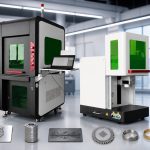
- Desktop standalone models: Suitable for small-batch, multi-variety processing, workshop repair and sample making scenarios, with small footprint and easy deployment.
- Conveyor online models: Integrated with assembly lines for fully automated continuous marking, matching mass production beat requirements.
- Visual positioning models: Equipped with CCD vision system for automatic identification and positioning of irregular workpieces, eliminating the need for custom fixtures and improving processing flexibility.
Calculate Total Cost of Ownership (TCO)
Unlike traditional marking equipment that requires continuous ink, solvent or blade replacement, fiber laser markers have no consumables in daily operation. With 100,000+ hours of laser life and low energy consumption, the 5-year total operating cost is only 30-40% of traditional inkjet printing equipment, delivering significant long-term cost savings for factories.
2026 Industry Trends & Market Outlook
According to the 2025 Global Industrial Laser Market Report released by the Laser Institute of America, the global fiber laser equipment market will maintain a 12.3% compound annual growth rate through 2030, with marking applications accounting for more than 35% of total industrial fiber laser usage.
The International Energy Agency (IEA) also points out in its Energy Technology Perspectives 2025 that high-efficiency laser processing technologies including fiber laser marking will help the manufacturing sector reduce energy consumption in the marking and identification segment by 15% by 2030, supporting global industrial decarbonization goals.
Two core trends are shaping the 2026 market:
- Intelligent integration: More fiber laser marking machines are being integrated with MES production management systems, realizing automatic code assignment, marking and data upload to support full digital product traceability.
- Green manufacturing priority: With global factories tightening energy consumption targets, the high energy efficiency and zero-consumable characteristics of fiber technology are accelerating its replacement of traditional ink printing and chemical etching processes.
Custom Laser Marking Solutions from ActionLasers
At ActionLasers, we design and manufacture industrial-grade fiber laser marking machines tailored for global B2B clients across automotive, electronics, medical device and general manufacturing sectors. All our equipment follows LIA performance standards and supports full customization from power configuration to automation integration.
Our technical team provides free material testing, parameter optimization and on-site deployment guidance, along with 24/7 global after-sales support. Whether you need a standalone desktop unit or a fully automated production line marking solution, we can deliver a system matched to your exact production requirements.