

What Is a CO2 Laser?
A CO2 laser (carbon dioxide gas laser) uses a mixture of CO₂, N₂, and He as its gain medium. Invented by Kumar Patel at Bell Labs in 1964, it remains one of the most widely used industrial lasers for marking, engraving, and cutting non-metal materials. But how does a CO2 laser work at the most basic level? It uses electrical energy to excite gas molecules inside a sealed tube, producing a concentrated infrared beam at 10.6 μm. Unlike solid-state lasers that use a crystal or fiber as the gain medium, a CO2 laser generates its beam through resonant energy transfer between nitrogen and carbon dioxide molecules. When buyers first ask how does a CO2 laser work, this energy transfer mechanism is the key concept to understand.
So what is a CO2 laser in practical terms? Put simply, what is CO2 laser technology — it is a workhorse tool in manufacturing lines worldwide, used to apply date codes on food packaging, engrave serial numbers on plastic components, mark logos on leather goods, and etch glassware. The CO2 laser’s defining advantage is that its 10.6 μm wavelength is strongly absorbed by organic and polymer materials, allowing clean, permanent marks without needing additional coatings or chemical treatments. Understanding what is a CO2 laser from an application perspective helps buyers match the technology to their production needs. For anyone wondering what is CO2 laser good for: any non-metal material that needs a permanent, high-speed mark.
Today, CO2 lasers are available in configurations ranging from compact 20 W marking heads to multi-kilowatt cutting systems. Understanding how does a CO2 laser work helps buyers decide whether it fits their marking application.
How Does a CO2 Laser Work?
The answer to how does a CO2 laser work starts with the laser’s gas mixture and the physics of energy transfer between molecules. The entire process can be broken into three stages: gas composition, electrical excitation, and optical amplification. To answer the question how does CO2 laser work at a molecular level, we need to look at the specific roles each gas plays in the laser tube. The core answer to how does a CO2 laser work lies in the resonant energy transfer between nitrogen and carbon dioxide molecules. Explaining how does a CO2 laser work is simpler once you visualize these three stages in sequence.
The Gas Mixture
A typical CO2 laser tube contains a precisely controlled gas blend:
- Carbon dioxide (CO2) — 10–20%: The active lasing medium. CO2 molecules are the ones that actually emit laser photons.
- Nitrogen (N2) — 10–20%: Acts as an energy reservoir. N2 molecules are easily excited by the electrical discharge and then transfer that energy to CO2 molecules through collisions.
- Helium (He) — 60–80%: Critical for cooling. Helium helps depopulate the lower laser level of CO2 and conducts heat away to the tube walls.
- Trace gases (H2, Xe, H2O): Small amounts of hydrogen, xenon, or water vapor are added in sealed-tube designs to help regenerate CO2 and stabilize the discharge.
Electrical Excitation and Energy Transfer
An electrical discharge is applied across the gas mixture — either DC, AC, or radio frequency (RF). This discharge excites the nitrogen molecules into a metastable vibrational state. Because nitrogen’s vibrational energy level closely matches the upper laser level of CO2, the excited N2 molecules transfer their energy to CO2 molecules during collisions with extremely high efficiency. This resonant energy transfer is what gives the CO2 laser its relatively high wall-plug efficiency compared to other gas lasers.
Once the CO2 molecules reach the upper laser level (asymmetric stretch mode), they are ready to undergo stimulated emission.
Stimulated Emission and the Optical Resonator
The gas-filled tube is placed between two mirrors — a total reflector at one end and a partial reflector (output coupler) at the other. When a photon emitted by a CO2 molecule strikes another excited CO2 molecule, it triggers the emission of an identical photon — same wavelength, phase, and direction. This cascade is called the avalanche effect. The mirrors bounce the beam back and forth through the gain medium, amplifying it until a powerful, coherent beam exits through the partial mirror.
According to the Wikipedia entry on carbon-dioxide lasers, the CO2 laser is “one of the highest-power continuous-wave lasers that are currently available” with efficiency “as large as 20%.”
Key Components of a CO2 Laser Marking System
A complete CO2 laser marking system consists of several essential subsystems. Understanding how does a CO2 laser work at the system level means knowing how these components interact:
| Component | Function |
|---|---|
| Laser tube (resonator) | Contains the gas mixture and electrodes; where the laser beam is generated |
| RF or DC power supply | Provides the electrical energy to excite the gas discharge |
| Cooling system | Water or air cooling removes waste heat; essential for tube longevity |
| Galvanometer scan head | Two high-speed mirrors that steer the laser beam across the workpiece |
| F-theta lens | Focuses the beam to a consistent spot size across the entire marking field |
| Control software | Interprets vector/text/image data and coordinates marking parameters |
| Exhaust / fume extraction | Removes smoke and particles generated during marking |
Each component must be matched to the application’s power requirement and duty cycle. For example, a 40 W sealed-tube CO2 laser used for packaging coding runs a closed-loop water chiller, while a lower-power RF-excited tube may dissipate heat through a finned heatsink.
Types of CO2 Lasers Used in Industry
Sealed-Tube CO2 Lasers
One of the most common types of CO2 laser for marking and engraving is the sealed-tube design. Here, the gas mixture is permanently sealed inside the glass or ceramic tube. These lasers are compact, affordable, and require no external gas supply. Typical power ranges from 20 W to 150 W, with lifetimes of 1,500–3,000 hours before the tube needs replacement. Sealed-tube CO2 lasers dominate the marking market for plastics, wood, and packaging materials.
Fast-Axial-Flow CO2 Lasers
For higher power requirements (500 W to 6 kW+), fast-axial-flow lasers circulate the gas mixture through the discharge region at high speed using a blower or pump. This convective cooling allows much higher output powers while maintaining beam quality. These systems are used for cutting metals and thick materials but are generally over-specified for marking applications.
RF-Excited CO2 Lasers
RF-excited CO2 lasers use radio-frequency energy (typically 13.56 MHz or 20–50 kHz AC) instead of DC to ionize the gas. RF excitation produces a more stable discharge, longer tube life (often 20,000–50,000 hours for metal RF tubes), and better pulse control — critical for high-contrast marking on sensitive plastics. These are the premium type among types of CO2 laser for industrial production lines where uptime matters.
CO2 Laser Wavelength and Why It Matters
The CO2 laser emits at 10.6 μm (and secondarily at 9.6 μm), placing it in the far-infrared region. This wavelength is fundamentally different from the 1.06 μm output of fiber or YAG lasers, and that difference drives the application split. When people ask how does a CO2 laser work differently from other laser types, the wavelength is the key distinction. Understanding how does CO2 laser work at the wavelength level explains why it excels on organics and struggles on metals:
- Strong absorption by organic materials: Plastics, wood, leather, paper, and textiles absorb 10.6 μm light very efficiently, meaning the laser energy is converted directly into heat at the surface — producing a clean, permanent mark.
- Reflection by bare metals: Most uncoated metals (aluminum, copper, brass, steel) reflect >90% of 10.6 μm light, making CO2 lasers ineffective for direct metal marking. This is why fiber lasers are preferred for metal applications.
- Safer for operator eyes (relatively): 10.6 μm light is absorbed by the cornea and does not reach the retina, so CO2 lasers pose a different eye-safety profile than near-IR lasers — though proper shielding is still mandatory.
This absorption behavior makes the CO2 laser the default choice for non-metal marking in industries ranging from food and beverage packaging to automotive interior trim.
What Materials Can a CO2 Laser Mark?
| Material | Mark Quality | Typical Applications |
|---|---|---|
| Plastics (ABS, PP, PE, PC) | Excellent — high-contrast, permanent | Electronic housings, medical devices, consumer goods |
| Wood / MDF | Excellent — deep engraved or surface mark | Furniture, signage, crafts, gift items |
| Leather | Excellent — crisp, dark mark | Footwear, bags, automotive interiors, fashion labels |
| Glass / Crystal | Good — etched frosted effect | Drinkware, awards, architectural glass, lab equipment |
| Paper / Cardboard | Excellent — burnished mark, no ink needed | Packaging date codes, batch numbers, barcodes |
| Acrylic / PMMA | Excellent — clear or frosted engraving | Signage, displays, awards, light guides |
| Stone / Ceramic | Good — etched surface mark | Tiles, memorials, decorative items |
| Rubber / Silicone | Fair to good — dark mark on light rubber | Keypads, gaskets, stamps, seals |
| Coated metals (painted, anodized) | Good — removes coating layer for contrast | Nameplates, control panels, automotive badges |
Data consolidated from industry reference: RP Photonics Encyclopedia — CO2 Lasers.
CO2 Laser vs. Fiber Laser for Marking
Buyers often compare CO2 lasers and fiber lasers when setting up a marking line. The right choice depends entirely on what you are marking. Knowing how does a CO2 laser work versus a fiber laser helps clarify the selection process. Understanding how does a CO2 laser work in comparison helps avoid costly misinvestment:
| Factor | CO2 Laser | Fiber Laser |
|---|---|---|
| Wavelength | 10.6 μm (far-IR) | 1.06 μm (near-IR) |
| Best for | Plastics, wood, glass, leather, paper, coated metals | Bare metals, some plastics, deep engraving |
| Wall-plug efficiency | ~10–20% | ~25–40% |
| Source lifetime | 1,500–50,000 hours (varies by tube type) | 50,000–100,000 hours |
| Marking speed (plastic) | Fast — optimized for organic absorption | Moderate — lower absorption in clear plastics |
| Marking speed (metal) | Not suitable (reflects) | Very fast — excellent absorption |
| Initial investment | Lower | Higher |
| Operating cost | Higher (tube replacement, cooling) | Lower (minimal consumables) |
For production lines that primarily handle non-metal materials — such as plastic packaging, wood products, or glass items — a CO2 laser is both the most effective and most economical choice. For mixed-material shops, some manufacturers now offer dual-laser systems (CO2 + fiber) in a single cabinet.
CO2 Laser Tube Lifespan and Maintenance
One of the most common concerns for anyone researching how does a CO2 laser work in a production environment is tube lifespan. The answer depends on the tube construction and operating conditions:
- Standard glass sealed tubes (DC-excited): 1,500–3,000 hours typical. The glass tube gradually loses gas purity as CO2 dissociates into CO and O2. These tubes are low-cost and simple to replace.
- RF-excited metal tubes (e.g., Coherent Diamond series): 20,000–50,000 hours. The metal-ceramic construction and RF excitation produce a more stable plasma, and the tube can be refilled with gas rather than replaced entirely.
- Flow-through tubes: Continuous gas supply means tube degradation is minimal — but you must budget for ongoing gas consumption.
Key maintenance practices that extend tube life:
- Maintain proper coolant temperature — CO2 lasers are sensitive to overheating; use a recirculating chiller set to 20–25 °C.
- Keep optics clean — dust and debris on the output mirror or lens absorb energy and can crack the optic or reduce power.
- Run at rated duty cycle — exceeding the tube’s maximum duty cycle accelerates gas degradation and electrode wear.
- Replace tube proactively — when output power drops below 70% of rated value, marking contrast and speed degrade; swap the tube before it affects production quality.
Choosing the Right CO2 Laser Marking Machine
Selecting a CO2 laser marking system for your production line involves balancing power, speed, and budget. Here is a practical decision framework:
- Identify your material — If you mark plastics, wood, leather, glass, or packaging, a CO2 laser is your primary candidate.
- Determine required power — 20–30 W for surface marking on plastics and paper; 40–60 W for faster throughput and deeper engraving on wood or acrylic; 100 W+ for thick material processing.
- Choose tube type — Referencing the types of CO2 laser above: sealed DC tubes for cost-sensitive, lower-volume operations; RF-excited metal tubes for high-duty-cycle production lines where uptime is critical.
- Consider field size — Standard marking fields range from 110×110 mm to 300×300 mm. Larger fields require longer focal-length lenses and reduce effective power density.
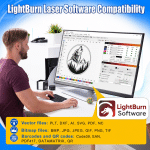
- Check software compatibility — Ensure the controller supports your file formats (DXF, PLT, AI, BMP) and can integrate with your existing MES or ERP system.
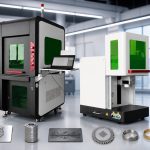
For teams evaluating a CO2 laser for packaging coding, plastic part marking, or wood engraving, exploring a dedicated CO2 laser marking solution is the next practical step. ActionLasers offers a 40 W CO2 laser marking machine specifically designed for industrial coding and packaging applications — view the CO2 laser marking machine range and request a free sample test to verify your material compatibility before committing to a purchase.
Conclusion
Understanding how does a CO2 laser work is the foundation for choosing the right marking technology. CO2 lasers operate by electrically exciting a gas mixture of CO2, N2, and He, using resonant energy transfer to produce a powerful 10.6 μm infrared beam that is naturally absorbed by plastics, organics, and ceramics. From sealed-tube marking heads for packaging codes to RF-excited industrial engraving stations, the types of CO2 laser available today cover a broad spectrum of power, cost, and longevity. Whether you are a production engineer or a procurement manager, knowing how does a CO2 laser work will help you make a confident equipment decision.
The CO2 laser remains the most cost-effective and technically optimal tool for non-metal marking — and with proper maintenance and tube selection, it delivers reliable, high-contrast marks for thousands of production hours. By mapping your material set, throughput requirements, and budget against the laser parameters discussed here, you can confidently select a system that will serve your line for years.