

Product Overview
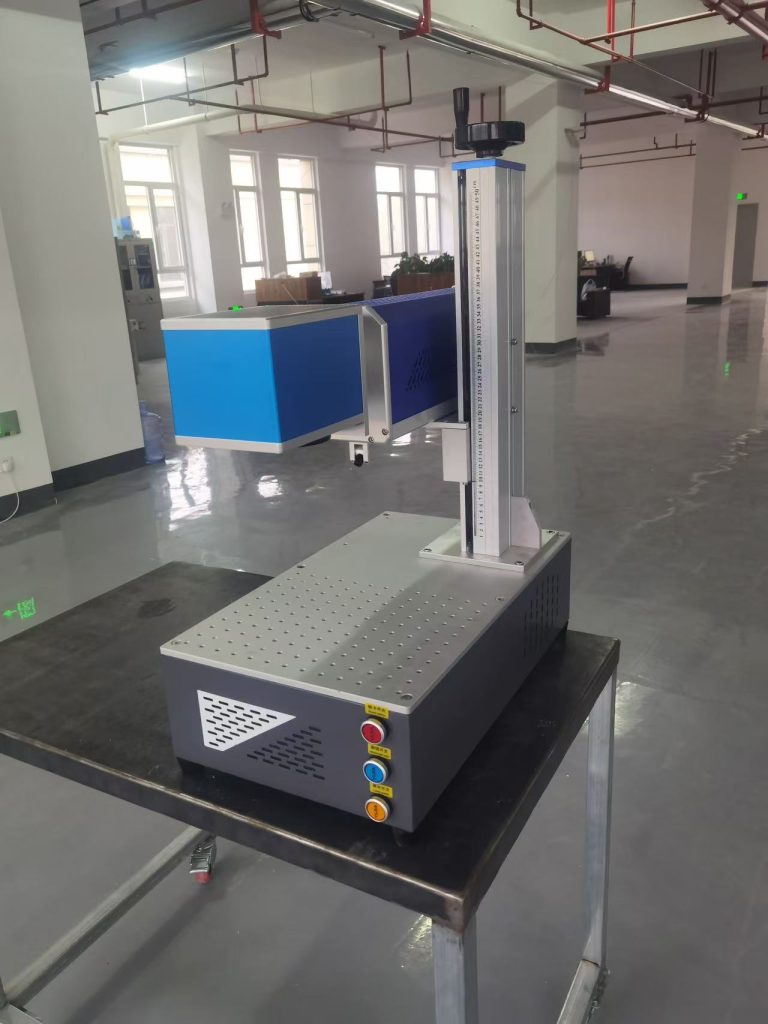
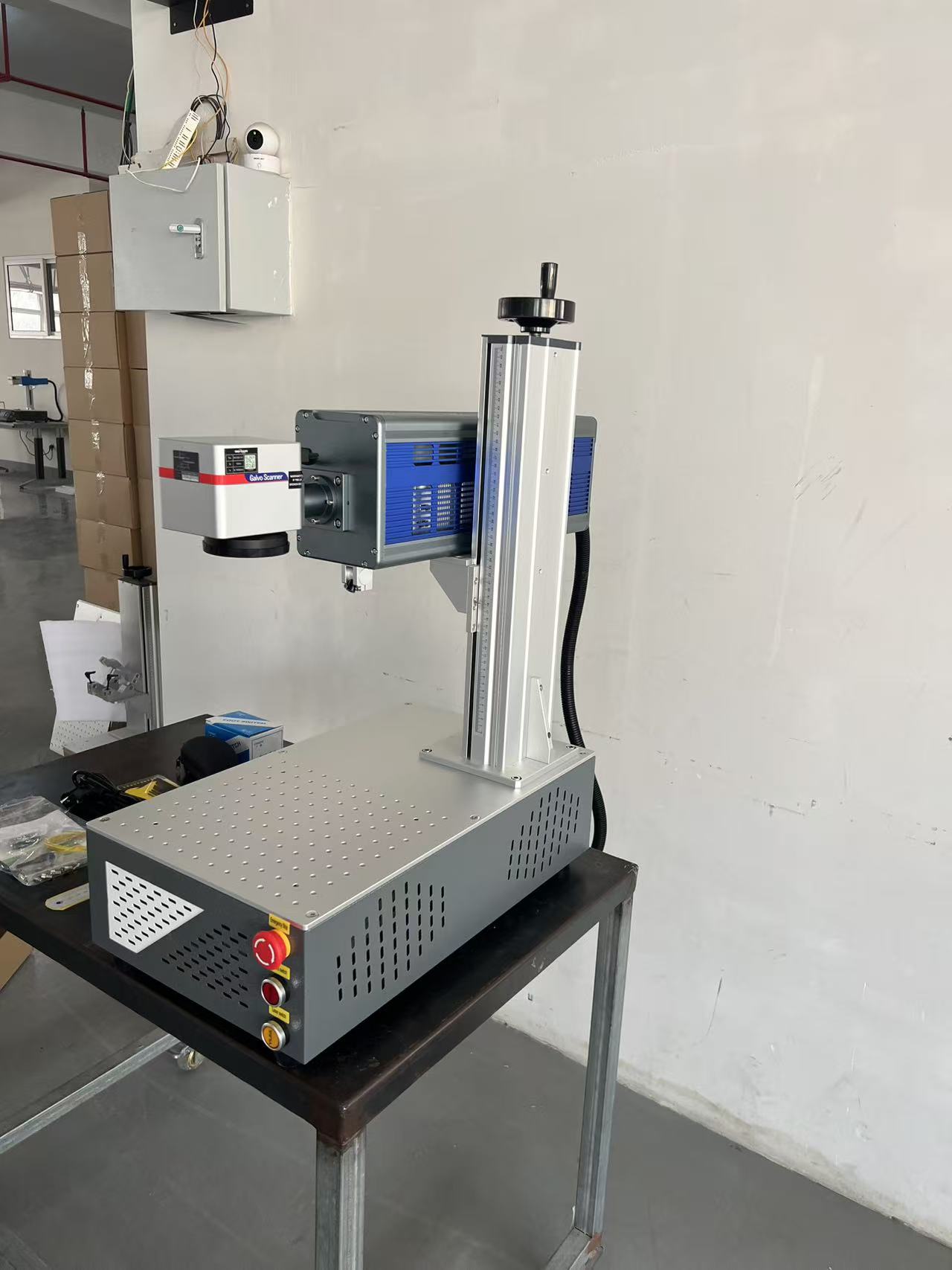
The 40W CO2 laser marking machine is a compact, high-speed coding system engineered for packaging industry production lines. It combines a Bost laser source with a Jinhaihuang 20-beam galvanometer and a Mean Well power supply from Taiwan, delivering reliable marking on non-metal materials such as paper, cardboard, plastic, acrylic, wood, leather, rubber, and coated surfaces. This CO2 laser marking machine handles both static marking for individual items and flying marking for continuous conveyor belt integration, making it suitable for small-batch workshops and large-scale production environments alike.
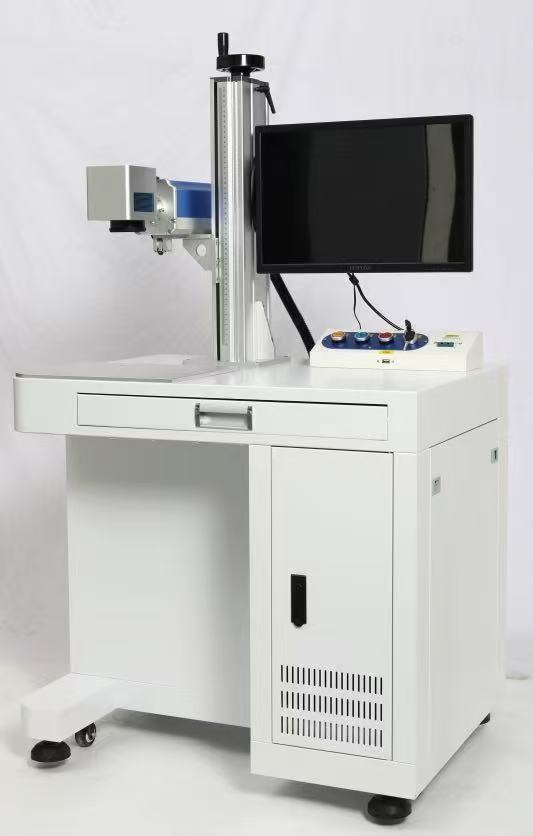
The integrated portable structure occupies minimal floor space, and the flexible height adjustment stand accommodates workpieces of varying thicknesses. Five optional F-theta lenses — 110×110mm, 150×150mm, 175×175mm, 200×200mm, and 300×300mm — let operators choose the field size that matches their product. Smaller lenses produce higher laser intensity for finer detail, while larger fields cover bigger parts in a single pass, though they require higher laser power. Each unit ships with positioning strips, an 8GB USB flash drive, hex wrenches, data cable, power cable, foot switch, parameter sheet, ruler, test business card, screws, and a 2,600-set electronic pattern library.
Technical Specifications
| Product | 40W Full Power CO₂ Laser Marking Machine |
| Laser Source | Bost |
| Galvanometer | Jinhaihuang 20 beam |
| Power Supply | Mean Well (Taiwan) |
| Control Card | JCZ Cracked System |
| F-theta Lens (Optional) | 110×110mm; 150×150mm; 175×175mm; 200×200mm; 300×300mm |
The F-theta lens selection directly affects marking results. A 110×110mm lens concentrates the 40W beam into a smaller spot, producing higher intensity for intricate micro-marking and fine text. Stepping up to 300×300mm spreads the same power over a wider area, suitable for large cartons and panels where throughput matters more than microscopic detail. The table below summarises which lens fits common scenarios.
Lens Selection Guide
| Lens Size | Best For | Laser Intensity |
|---|---|---|
| 110×110mm | Fine detail, small parts, high-density barcodes | Highest |
| 150×150mm | Medium product labels, electronic components | High |
| 175×175mm | General packaging, plastic bottles | Moderate-high |
| 200×200mm | Cartons, boxes, larger flat surfaces | Moderate |
| 300×300mm | Large panels, bulk cartons, pallet labels | Lower |
Product Features
High-Speed Marking with Customisable Content
This machine marks at production-line speeds, with freely programmable graphic and text shapes. It handles batch numbers, expiration dates, barcodes, QR codes, logos, and serialised patterns without any consumables such as ink or solvent. The JCZ cracked control system processes vector and bitmap files imported via the 8GB USB drive, and the 2,600-set electronic pattern library provides ready-to-use templates for common packaging formats. Operators can create custom markings and store them on the USB drive for instant recall between jobs without software reconfiguration.
Compact Portable Structure
The entire unit is housed in an integrated frame with a footprint small enough to fit on a standard workbench. Moving it between production lines takes minutes — the operator lifts the unit by its handles, repositions it, and reconnects power and data cables. The portable design suits multi-site operations where a single CO2 laser marking machine rotates between facilities, eliminating the need to purchase separate coders for each location. The same compact form factor also makes it practical for small workshops where floor space is at a premium.
Stable CO2 Laser Source
The Bost laser source delivers consistent beam quality over extended running hours. The sealed CO2 tube requires no gas refills or optical alignment adjustments during normal operation, which reduces maintenance downtime. The clear marking contrast on paper, plastic, and coated materials ensures that codes remain readable throughout the product’s shelf life and supply chain handling. For a packaging line running three shifts, this reliability translates into fewer unscheduled stops compared to inkjet printers that require frequent printhead cleaning and solvent top-ups.
Flexible Height Adjustment Stand
The marking head mounts on an adjustable stand that raises and lowers to accommodate workpieces from thin sheets up to tall boxes. This eliminates the need for separate fixturing for different product heights and speeds up changeovers between production runs. The stand locks securely at the chosen height, maintaining consistent focal distance across the full marking field. A packaging facility that switches between flat cartons and tall bottles every hour can adjust the stand in seconds rather than dismantling the setup.
Static and Flying Marking Modes
The system supports both static marking for individual items placed under the lens and flying marking for products moving on a conveyor belt. In flying marking mode, the galvanometer synchronises with the belt speed to mark moving targets in real time without stopping the line. This flying marking laser system capability makes it practical for high-volume packaging lines where every-second counts. The operator switches between modes through the control interface without mechanical reconfiguration, so a single machine can serve both batch production and continuous line applications.
Business Value
Adopting this CO2 laser marking machine eliminates recurring costs of ink, solvents, printheads, and labels associated with traditional coding methods. A single 40W CO2 laser marking machine replaces consumable-heavy printers, with the laser tube operating for thousands of hours before replacement. The flying marking capability maintains full production line speed, so there is no throughput penalty for adding permanent codes to each unit. Over a year of operation, the cost per marked item drops significantly compared to thermal inkjet or hot stamping, which require replacement cartridges and foil rolls. For a packaging line running multiple shifts, the savings from eliminating consumable purchases alone can offset the equipment cost within the first year.
The modular lens system lets a single CO2 laser coding machine handle multiple product lines by swapping the F-theta lens between runs. A packaging facility that produces both small bottles (110×110mm lens) and large cartons (300×300mm lens) can serve both with one machine instead of purchasing separate coders for each format. The compact footprint saves floor space compared to inkjet printing stations that require drying tunnels and solvent storage areas. Additionally, the 2,600-set electronic pattern library means no upfront investment in design software or template creation for standard marking jobs. The USB-based file transfer system also eliminates the need for a dedicated control PC tethered to the machine — operators can prepare marking files on any computer and transfer them at the machine.
With the JCZ cracked control system, operators have full control over marking parameters including speed, power, frequency, and scan path. This allows fine-tuning for different materials without vendor lock-in or per-license software fees. The same machine can be calibrated for deep engraving on acrylic one day and high-speed surface marking on cardboard the next, simply by adjusting the parameter set. The combination of a 40W CO2 laser marking machine with the JCZ control gives the operator the flexibility to respond to new marking requests without waiting for supplier support or software updates.
Applications
In the packaging industry, this CO2 laser marking machine permanently codes expiration dates, batch numbers, lot codes, and barcodes onto folding cartons, corrugated boxes, plastic bottles, foil pouches, blister packs, and shrink-wrap films. The non-contact marking process does not damage packaging materials or compromise product integrity, unlike hot stamping or embossing. A 40W CO2 laser marking machine on a conveyor line can mark hundreds of packages per minute, adapting to line speeds through the flying marking mode. The JCZ control system stores multiple job profiles, so switching between a barcode run and a date-code run takes seconds.
Food and beverage producers use the flying marking mode to print date codes on beverage cartons and snack pouches at line speeds. The codes remain legible through cold storage and condensation, which is critical for perishable goods tracking. Pharmaceutical and cosmetics companies rely on the high-contrast marking on coated paper and plastic containers for serialisation and track-and-trace compliance. For a boutique packaging converter, the static marking mode handles short runs of custom boxes and gift sets, where each batch carries a different design or personalised message — the 2,600 pattern library covers common templates, and the operator can import custom artwork for each order. This CO2 laser marking machine serves as a CO2 laser engraver for packaging and also for broader product marking needs within the same facility.
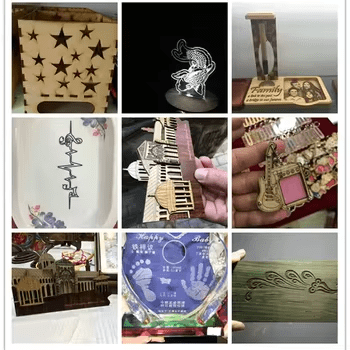
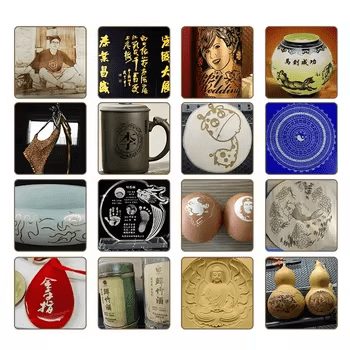
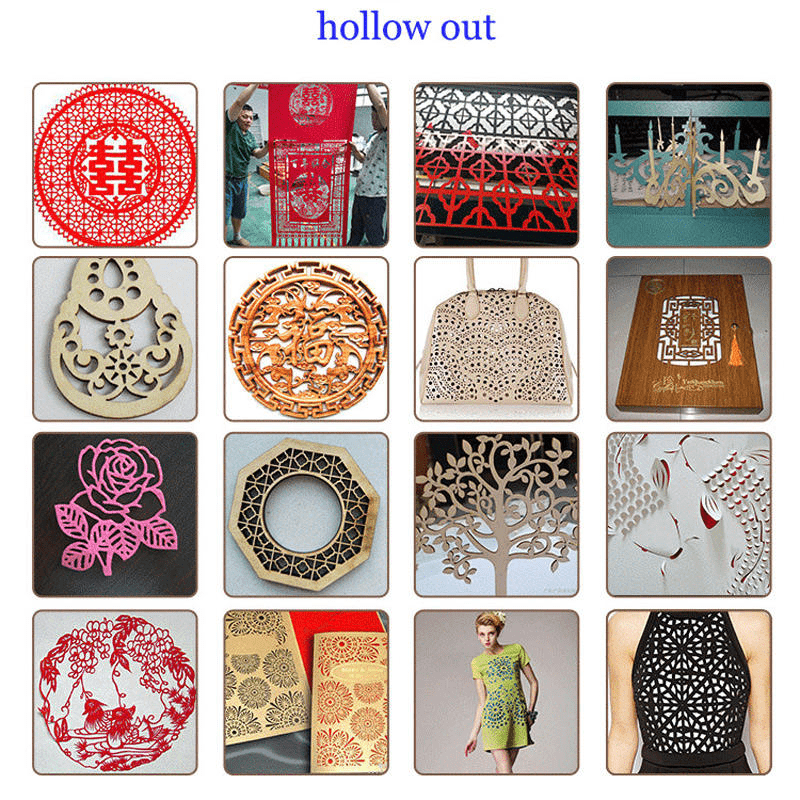
Beyond packaging, the machine marks acrylic signage, wooden plaques, leather goods, rubber gaskets, and electronic enclosures. A promotional products supplier can engrave logos and text on branded merchandise using the high-speed vector marking mode, while an electronics manufacturer codes serial numbers on plastic housings and connectors. The height adjustment stand accommodates the varying thicknesses of these workpieces without additional tooling. For a small business using this CO2 laser engraver for packaging, the same unit can also mark corporate gifts and internal part labels, maximising the return on a single investment. The versatility across material types means a packaging company can expand into new product categories without adding a second marking system.
Why Choose This CO2 Laser Marking Machine
This 40W system combines component brands that are individually specified — Bost for the laser source, Jinhaihuang for the galvanometer, and Mean Well for the power supply — so buyers know exactly what is inside the enclosure rather than receiving a generic machine. The JCZ cracked control system gives the operator unrestricted access to marking parameters, which is useful for shops that need to customise every job and cannot tolerate per-feature licensing restrictions.
Five F-theta lens options from 110×110mm to 300×300mm mean the same CO2 laser marking machine can be configured for micro-marking small parts or coding large cartons, simply by changing the lens. The complete accessory kit ships with the machine, so production can start the day it arrives — no additional purchases of cables, software, or pattern files are required. The portable structure also means it can be shared across multiple production lines in the same facility, amortising the investment over a wider set of applications. For a packaging company evaluating its first CO2 laser marking machine, the included USB drive with 2,600 patterns eliminates the learning curve of creating marking content from scratch. The combination of Mean Well power supply reliability and Bost laser source longevity gives production managers confidence in daily operation across multiple shifts.
FAQ
Q1: What materials can this CO2 laser marking machine mark?
A: It marks non-metal materials including paper, cardboard, plastic, acrylic, wood, leather, rubber, glass, and coated metals. The 40W CO2 laser source produces clear, permanent contrast on these substrates without inks or solvents. It does not mark bare metals — a CO2 laser is optimised for organic and polymer-based materials.
Q2: What is the maximum marking area?
A: With the 300×300mm F-theta lens, the maximum marking field is 300×300mm. The 110×110mm lens provides the highest laser intensity for fine detail on smaller parts. The lens is user-swappable and takes about one minute to change.
Q3: How do I choose the right F-theta lens?
A: Use a smaller lens (110×110mm or 150×150mm) for fine detail, high-density barcodes, and small parts. Use a larger lens (200×200mm or 300×300mm) for big cartons, panels, and applications where throughput per pass matters more than microscopic resolution. Smaller lenses produce higher laser intensity — the 110×110mm lens concentrates the 40W beam more than the 300×300mm lens does.
Q4: Can it integrate with an existing packaging line?
A: Yes, the flying marking mode synchronises with conveyor belt speed to mark products in motion. The flying marking laser system connects via standard I/O signals and does not require stopping the line for each code. The operator sets belt speed parameters in the JCZ control interface.
Q5: What accessories are included in the box?
A: The package includes 2 positioning strips, an 8GB USB flash drive, hex wrenches, data cable, power cable, foot switch, parameter sheet, ruler, test business card, screws, and a 2,600-set electronic pattern library.
Q6: Is the height adjustable for different product sizes?
A: Yes, the marking head mounts on a flexible height adjustment stand that accommodates workpieces from thin sheets to tall boxes. The stand locks securely at the chosen height to maintain consistent focal distance.
Q7: What is the difference between static and flying marking?
A: Static marking places the product under the lens and marks it while stationary — suitable for small batches, sample runs, and non-conveyor workflows. Flying marking marks products moving on a conveyor belt, synchronised by the galvanometer, for high-volume production lines. The operator switches modes through the software without changing hardware.
Q8: Can I import my own designs and fonts?
A: Yes, the JCZ control system accepts standard vector and bitmap formats via the USB drive. The included 2,600 pattern library provides ready-made templates, and custom graphics and text shapes can be imported freely. The system supports common font formats for variable text fields such as date codes and batch numbers.